

Abstract
Objective: Although hypersensitivity reactions to oral iron preparations are rare, they are clinically challenging as they can limit treatment options for iron deficiency anemia. Data on cross-reactivity between different oral iron formulations are limited, and guidance on safe switching strategies is insufficient. This study aimed to define the clinical characteristics of patients with suspected oral iron hypersensitivity and to evaluate the tolerance of alternative oral iron preparations using supervised oral provocation testing.
Materials and Methods: We retrospectively analyzed 18 adult patients who presented to a tertiary allergy clinic with a history of hypersensitivity to an oral iron preparation between June 2011 and June 2025. Alternative oral iron formulations were selected based on differences in iron valence ferrous (Fe²⁺) and ferric (Fe³⁺) and ligand or complex structure. Oral provocation tests were performed using graded protocols.
Results: The cohort included 17 females and 1 male with a mean age of 42.7 ± 9.5 years. Most reactions were attributed to ferrous (Fe²⁺) salts (77.8%), whereas ferric (Fe³⁺) salts accounted for 22.2% of the culprit oral iron formulations. The most frequent symptom was skin symptoms (77.8%), followed by angioedema or mucosal involvement (38.9%), systemic or vasovagal-like symptoms (27.8%), and gastrointestinal complaints (11.1%). Three patients experienced clinically anaphylactic reactions. Alternative iron formulations were selected by altering the iron oxidation status and/or ligand structure. All oral provocation tests with alternative preparations, including extended provocation protocols, were negative (100%), indicating excellent tolerance and a low probability of clinically significant cross-reaction.
Conclusion: In patients suspected of having oral iron hypersensitivity, switching to an alternative oral iron preparation with a different oxidation state and/or ligand by performing provocation tests appears to be a safe and effective strategy. These findings support that hypersensitivity reactions are more closely related to formulation-specific components than to iron itself, and offer a practical approach to maintaining oral iron therapy.
Keywords: drug hypersensitivity, iron compounds, drug provocation tests
Introduction
Iron deficiency anemia is a prevalent nutritional condition globally, impacting up to 25% of the population, particularly among children, women of reproductive age, and those in low and middle-income nations [1]. Allergic reactions to oral iron are uncommon; most side effects are gastrointestinal rather than true hypersensitivity. Intravenous iron is more likely to cause severe allergic reactions, such as anaphylaxis, than oral iron [2]. Complement activation-related pseudo-allergy induced by iron nanoparticles is likely a more prevalent pathogenic mechanism in acute reactions to contemporary intravenous iron formulations than an immunological IgE-mediated response [3]. According to ENDA/EAACI standards, individuals with suspected drug allergies should have a thorough clinical history assessment, subsequently followed by drug provocation testing with the suspected or an alternate medication, when suitable [4]. In patients with a history of severe acute reactions, drug provocation testing with the culprit drug is generally avoided; however, supervised oral provocation with an alternative formulation may represent a safe and effective approach. Patients experiencing hypersensitivity reactions to iron preparations pose a considerable clinical problem, since these reactions may restrict viable therapy alternatives for iron deficiency anemia. Furthermore, information regarding cross-reactivity among various oral iron salts is limited, complicating the prediction of tolerance to alternate iron formulations and hindering clinical decision-making. The aim of this study was to characterize the clinical patterns of reactions attributed to suspected oral iron allergy and to evaluate the tolerability of alternative oral iron preparations using oral provocation tests.
Materials and Methods
Study design
The characteristics of 18 patients who attended our Adult Allergy Clinic due to allergies to oral iron preparations from June 2011 to June 2025, along with the outcomes of provocation tests conducted with other oral iron medications, were analyzed.
Patients were included in the study if they had a clinical history suggestive of a hypersensitivity reaction to an oral iron formulation. The research was conducted at a tertiary adult allergy clinic. After a detailed clinical history, patients were evaluated per standard clinical procedures, and when appropriate, oral provocation testing with a different oral iron formulation was conducted to evaluate tolerance. The choice of an alternate iron salt was predicated on variations in iron valency and conjugate configuration. The study protocol was approved by the local ethics committee. (Approval No: SBA25/1024; Date: 09 Dec 2025)
Data collection and oral provocation tests
Demographic characteristics including age and sex, the suspected culprit oral iron preparation, and detailed descriptions of clinical reaction patterns were recorded. Clinical reactions were classified according to their type and timing, as immediate or delayed. The following symptoms were systematically evaluated during the hypersensitivity reaction assessment: cutaneous manifestations, including flushing, pruritus, urticaria, and angioedema; cardiovascular symptoms such as chest pain, tachycardia, presyncope, syncope, and hypotension; respiratory features including nasopharyngeal symptoms, dyspnea, wheezing, and oxygen desaturation; throat tightness; gastrointestinal complaints including nausea, vomiting, diarrhea, and abdominal pain; and atypical manifestations such as fever or chills, back and neck pain, and sensory or motor disturbances.
The drug provocation test (DPT) was considered the reference standard for confirming or excluding hypersensitivity to iron preparations and were performed in accordance with the European Network for Drug Allergy (ENDA) guidelines and the recommendations of the EAACI Drug Allergy Interest Group [4]. In cases where the clinical association between the hypersensitivity reaction and the culprit iron formulation was strong, particularly when the initial reaction had been severe, testing was conducted using an alternative iron preparation rather than the suspected agent. Alternative oral iron preparations were selected based on differences in iron valency ferrous (Fe²⁺) versus ferric (Fe³⁺) formulations and conjugate or excipient structure, aiming to minimize potential cross-reactivity.
Provocation tests were conducted using graded oral challenge protocol, depending on the clinical history and severity of the reported reaction. DPTs were carried out using a graded dosing protocol, starting at 1/100 of the therapeutic dose, followed by stepwise increases to 1/10, 1/2, and finally the full dose at 30–60 minute intervals. All tests were performed under medical supervision with an appropriate observation period following administration. After administration of the cumulative target dose, patients were observed for at least four hours.
A test was considered positive if objective clinical signs consistent with hypersensitivity occurred during or after the challenge. In the absence of any clinical symptoms, the test result was defined as negative.
Statistical analysis
Statistical analyses were performed using the Statistical Package for the Social Sciences (SPSS) version 27.0 (IBM Corp., Armonk, NY, USA). Continuous variables were summarized as mean ± standard deviation (SD) for normally distributed data and as median with interquartile range (IQR) for non-normally distributed data, as appropriate. Categorical variables were summarized as frequencies and percentages. Given the descriptive nature of this retrospective study and the limited sample size, the analyses were primarily descriptive.
Results
Patient characteristics and initial culprit iron preparations
The study population consisted of 18 patients with a mean age of 42.7 ± 9.5 years. The majority of patients were female (n = 17, 94.4%), while only one patient (5.6%) was male (Table 1).
| Table 1. Baseline characteristics and reaction patterns of patients with suspected oral iron hypersensitivity. | |
| Variable |
|
| Total patients, n |
|
| Female, n (%) |
|
| Male, n (%) |
|
| Age, mean ± SD (years) |
|
| Culprit iron formulation | |
| Ferrous (Fe²⁺) salts, n (%) |
|
| Ferric (Fe³⁺) salts, n (%) |
|
| Most frequent culprit formulation |
|
| Clinical phenotype of reactions* | |
| Cutaneous (pruritus, urticaria, rash), n (%) |
|
| Angioedema / mucosal involvement, n (%) |
|
| Vasovagal or systemic symptoms, n (%) |
|
| Gastrointestinal symptoms, n (%) |
|
| Anaphylaxis, n (%) |
|
| Timing of hypersensitivity reaction | |
| Early onset (≤ 6 hours), n (%) |
|
| Delayed onset (> 6 hours), n (%) |
|
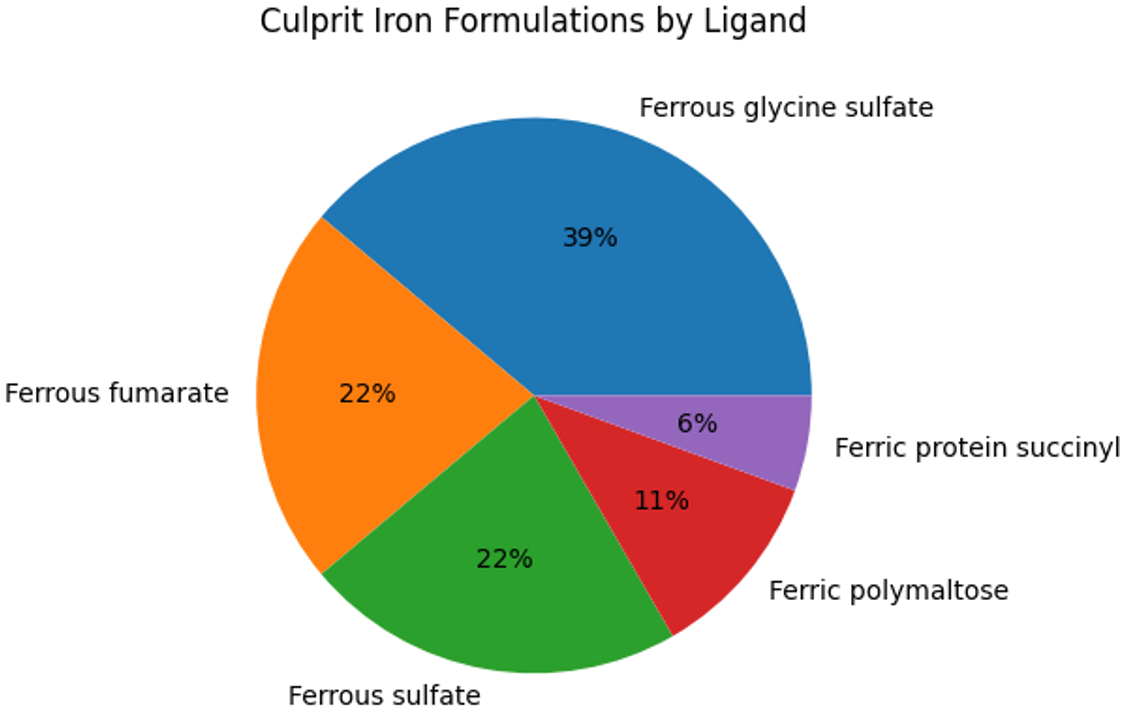
Among the 18 patients included in the analysis, hypersensitivity reactions were most frequently associated with oral ferrous iron preparations, accounting for 14 cases (77.8%). These reactions were mainly attributed to ferrous glycine sulfate, ferrous fumarate, and ferrous sulfate formulations. In contrast, ferric oral iron preparations were implicated in 4 patients (22.2%), predominantly involving ferric hydroxide polymaltose and ferric protein succinylate. No patient experienced a reaction to intravenous iron in this updated cohort (Figure 1).
Clinical characteristics of hypersensitivity reactions
The most common clinical presentation was cutaneous involvement, including pruritus, erythema, urticaria, or maculopapular eruptions, observed in 14 patients (77.8%). Angioedema or mucosal involvement, such as lip, oral cavity or throat swelling, hoarseness, or dyspnea, was documented in 7 patients (38.9%). Systemic or vasovagal-like reactions, including dizziness, palpitations, sweating, syncope, or transient loss of consciousness, occurred in 5 patients (27.8%), while gastrointestinal symptoms (nausea and/or diarrhea) accompanied the reaction in 2 patients (11.1%). Several patients exhibited overlapping symptom patterns. Three patients’ reactions were compatible with anaphylaxis.
This cohort exhibited two patterns of hypersensitive reactions to oral iron. Nine out of 18 patients (50%) had symptoms within the initial 6 hours post-drug administration and were categorized as experiencing early responses. These responses generally manifested following the initial or subsequent dose and included dizziness, nausea, pruritus, angioedema, respiratory problems, or syncope. Nine patients (50%) showed delayed reactions, with symptom onset following repeated dosage or several days of exposure, predominantly between days 3 and 10. Delayed reactions were mainly marked by cutaneous symptoms including itching, urticaria, rashes, and localized edema.
Alternative iron preparations and oral provocation tests
We selected alternative oral iron formulations based on both the oxidation state of iron (Fe²⁺ vs. Fe³⁺) and the ligand/side-chain structure of the complex. Ferric (Fe³⁺) preparations constituted the majority of alternative oral agents used in provocation testing (n=10/18, 55.6%). Among these, ferric protein succinylate was administered most frequently (n=5, 27.8%), followed by ferric hydroxide polymaltose complexes (n=4, 22.2%) and ferric maltol in one case (n=1, 5.6%). Ferrous formulations were selected in 8 patients (44.4%), including ferrous fumarate (n=3, 16.7%), ferrous glycinate sulfate (n=2, 11.1%), ferrous gluconate (n=2, 11.1%), and ferrous sulfate in one patient (n=1, 5.6%) (Figure 2).
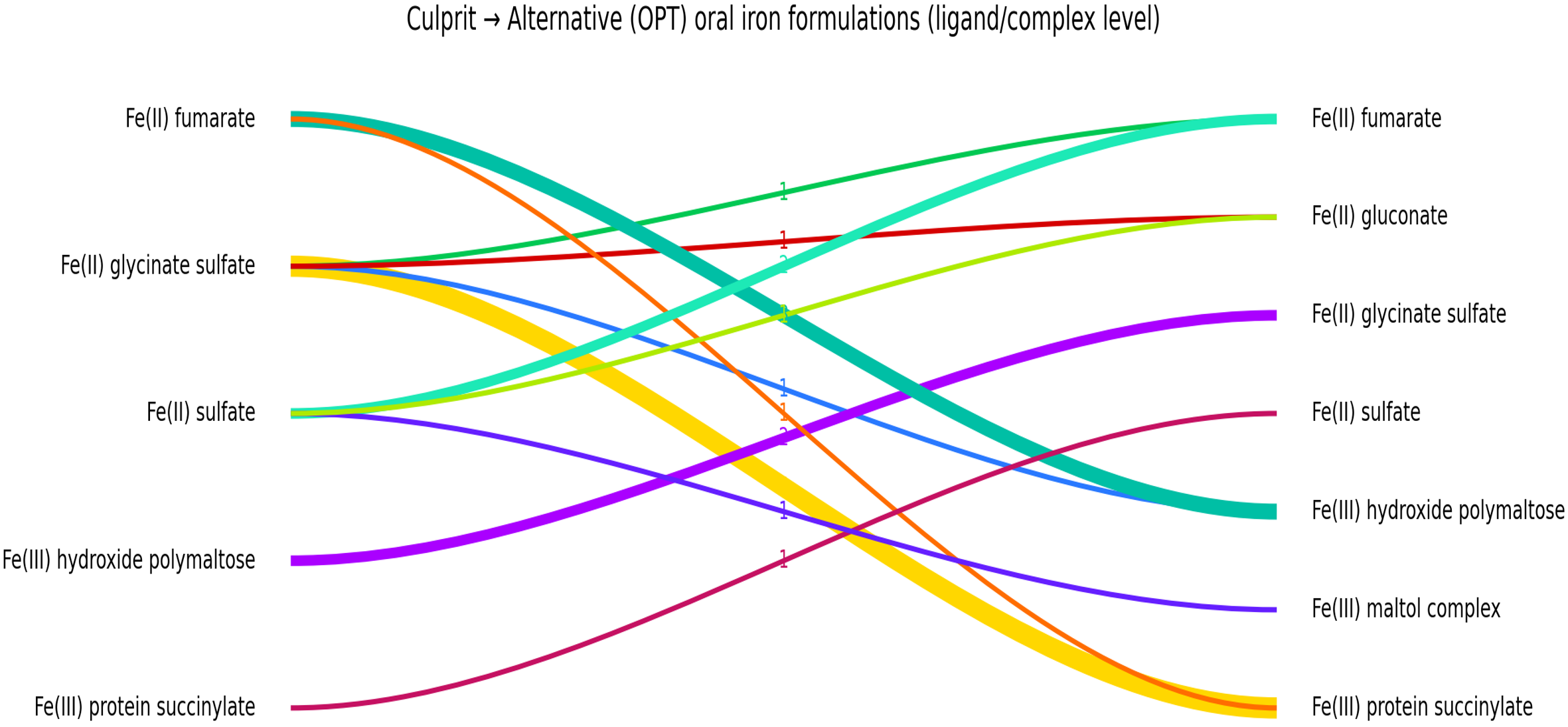
Taken together, these results demonstrate that alternative compounds with distinct oxidation states and ligand complexes were intentionally selected to minimize the risk of recurrent hypersensitivity reactions. All oral provocation tests were negative (100%), including extended protocols where applicable, demonstrating good tolerability of alternative iron formulations and supporting a low likelihood of clinically relevant cross-reactivity between different oral iron compounds.
Discussion
We aimed to demonstrate the outcome of using alternative oral iron preparations in patients with suspected hypersensitivity reactions and to provide a practical, clinically applicable approach for continued iron replacement when treatment remains indicated. Accordingly, our focus was on the tolerability of switching strategies supported by supervised oral provocation testing rather than on identifying underlying predisposing risk factors.
Hypersensitivity reactions to iron have been described predominantly with intravenous formulations, with broad clinical spectrum from mild, self-limited symptoms to severe systemic reactions. Adverse events may be influenced by the infusion rate and can present with dyspnea, chest or back pain, musculoskeletal discomfort, hypotension, tachycardia, nausea, or pruritus [5]. Mild reactions often resolve spontaneously or after slowing the infusion and may not recur on rechallenge, whereas manifestations such as angioedema, urticaria, or severe systemic reactions including anaphylaxis warrant careful evaluation. Delayed presentations, characterized by hypotension, myalgias, malaise, or vomiting have also been reported [6-8]. Atopy and various medication allergies, especially past iron hypersensitivity reactions, are risk factors for severe hypersensitivity reactions [9].
Only a limited number of cases have been published describing hypersensitivity reactions to oral iron preparations. Reported phenotypes include maculopapular eruptions, pustular eruptions, vasculitis, and photodermatitis [10-13]. Urticaria with or without angioedema has also been described. In rare instances, anaphylaxis has been reported [14].
Although oral preparations are generally better tolerated and less frequently associated with hypersensitivity, any suspected reaction to oral iron should nevertheless be evaluated and managed carefully [8]. In line with current international guidelines, we avoided re-exposure to the culprit iron preparation in patients with a history of severe immediate reactions, particularly anaphylaxis, and preferentially selected alternative oral iron formulations whenever possible [4,15].
In line with prior findings on iron-induced hypersensitivity, skin manifestations were the primary phenotype in our cohort, with pruritus, erythema, urticaria, and maculopapular eruptions occurring most frequently, while angioedema and mucosal symptoms (swelling of the lips, oral cavity, or throat, hoarseness, dyspnea) were also an important feature. A small number of patients experienced gastrointestinal problems, such as nausea or diarrhea, during the reaction, indicating that non-cutaneous symptoms may accompany skin manifestations in oral iron hypersensitivity reactions. A limited number of cases were clinically consistent with anaphylaxis; however, none of these instances underwent confirmatory testing with the same offending agent. This was mainly due to the practical accessibility of various alternative oral iron formulations, limited patient consent to undergo re-exposure to the suspected agent, and the absence of standardized diagnostic testing for most oral iron products in regular practice. Our findings indicate that oral iron hypersensitivity may present with both immediate and delayed reaction patterns. While immediate reactions were more often characterized by systemic manifestations such as angioedema, respiratory symptoms, or syncope, delayed reactions predominantly presented with cutaneous manifestations, highlighting the heterogeneous clinical spectrum of oral iron hypersensitivity. This distribution suggests that both acute and delayed hypersensitivity reactions are prevalent in patients with suspected oral iron allergy, underscoring the necessity for tailored monitoring measures during assessment and drug provocation testing.
In most published reports, either ferrous or ferric iron preparations have been identified as the suspected triggers. Ferric salts are considered the most chemically stable form of iron [16]. Greater stability may reduce binding to macromolecules, which could translate into lower allergenic potential. Ferric formulations are also generally less absorbable than ferrous salts. Reduced absorption may limit systemic exposure and thereby decrease the likelihood of clinically apparent reactions. This may partly explain why allergic reactions appear to be reported less often with ferric than with ferrous preparations.
Cross-reactivity has been documented among several ferrous salts, including ferrous sulfate, ferrous ascorbate, and ferrous lactate [3]. A case report described a patient who developed hypersensitivity to ferrous glycine sulfate and ferrous fumarate, yet tolerated ferric polymaltose complex, suggesting that differences in oxidation state and the associated ligand may be clinically meaningful when selecting an alternative oral iron agent [17]. These findings help explain why changing to an iron preparation with a different oxidation state or ligand can be clinically useful in patients with suspected oral iron hypersensitivity. They also support a stepwise approach to selecting an alternative formulation before considering desensitization. Similarly, a pediatric case series demonstrated that four children with hypersensitivity to oral iron preparations successfully tolerated alternative oral iron formulations following supervised oral provocation testing, further supporting the selection of an alternative oral iron preparation in patients with suspected oral iron hypersensitivity [18].
A potential nonspecific immunological mechanism for hypersensitivity reactions to nondextran iron products is complement activation-related pseudoallergy (CARPA). In CARPA, complement activation produces anaphylatoxins, notably C3a and C5a, which can activate effector cells such mast cells and basophils, resulting in clinical manifestations similar to acute hypersensitivity [19,20].
In our study, oral provocation testing was successful in all patients when an alternative preparation was selected by changing the iron valence and/or the accompanying compound (ligand/complex). This finding supports the concept that, in suspected iron allergy reactions may be more closely related to the formulation components (i.e., the ligand/complex or excipients) than to elemental iron itself. In our cohort, the choice of an alternative iron preparation considered both the oxidation state (ferrous vs. ferric) and the ligand/complex (e.g., polymaltose, protein succinylate, maltol, gluconate, glycinate) to reduce the likelihood of clinically relevant cross-reactivity. Our findings indicate that alternative oral iron formulations can frequently be safely administered.
Ethical approval
This study was approved by the Hacettepe University ethics committee (Date: December 9, 2025, Decision/Protocol No: SBA25/1024). Informed consent was obtained from all participants involved in this study.
Data availability statement
The data supporting the findings of this study are not publicly available due to containing information that could compromise the privacy of research participants.
Conflict of interest
The authors declare that this study was conducted in the absence of any commercial or financial relationships that could be construed as a potential conflict of interest.
Funding
The authors declare that this study received no funding.
Generative AI statement
The authors declare that no generative AI or AI-assisted technologies were used in the writing or preparation of this study.
References
- Kolarš B, Mijatović Jovin V, Živanović N, et al. Iron deficiency and iron deficiency anemia: a comprehensive overview of established and emerging concepts. Pharmaceuticals (Basel) 2025;18(8):1104. https://doi.org/10.3390/ph18081104
- Pantopoulos K. Oral iron supplementation: new formulations, old questions. Haematologica 2024;109(9):2790-801. https://doi.org/10.3324/haematol.2024.284967
- Rampton D, Folkersen J, Fishbane S, et al. Hypersensitivity reactions to intravenous iron: guidance for risk minimization and management. Haematologica 2014;99(11):1671-6. https://doi.org/10.3324/haematol.2014.111492
- Barbaud A, Garvey LH, Torres M, et al. EAACI/ENDA position paper on drug provocation testing. Allergy 2024;79(3):565-79. https://doi.org/10.1111/all.15996
- Gómez-Ramírez S, Shander A, Spahn DR, et al. Prevention and management of acute reactions to intravenous iron in surgical patients. Blood Transfus 2019;17(2):137-45. https://doi.org/10.2450/2018.0156-18
- Barton JC, Barton EH, Bertoli LF, Gothard CH, Sherrer JS. Intravenous iron dextran therapy in patients with iron deficiency and normal renal function who failed to respond to or did not tolerate oral iron supplementation. Am J Med 2000;109(1):27-32. https://doi.org/10.1016/s0002-9343(00)00396-x
- Fishbane S, Ungureanu VD, Maesaka JK, Kaupke CJ, Lim V, Wish J. The safety of intravenous iron dextran in hemodialysis patients. Am J Kidney Dis 1996;28(4):529-34. https://doi.org/10.1016/s0272-6386(96)90463-1
- Wysowski DK, Swartz L, Borders-Hemphill BV, Goulding MR, Dormitzer C. Use of parenteral iron products and serious anaphylactic-type reactions. Am J Hematol 2010;85(9):650-4. https://doi.org/10.1002/ajh.21794
- Szebeni J, Fishbane S, Hedenus M, et al. Hypersensitivity to intravenous iron: classification, terminology, mechanisms and management. Br J Pharmacol 2015;172(21):5025-36. https://doi.org/10.1111/bph.13268
- Ortega N, Castillo R, Blanco C, Alvarez M, Carrillo T. Oral iron cutaneous adverse reaction and successful desensitization. Ann Allergy Asthma Immunol 2000;84(1):43-5. https://doi.org/10.1016/S1081-1206(10)62739-1
- Niemi KM, Kangas K. Non-thrombocytopenic purpuras. Acta Derm Venereol 1978;58:337-42. https://doi.org/10.2340/0001555558337342
- Ito A, Nomura K, Hashimoto I. Pustular drug eruption induced by ferrous fumarate. Dermatology 1996;192(3):294-5.
- Rodríguez-Jiménez B, Domínguez-Ortega J, Nuñez-Acevedo B, Cava-Sumner B, Kindelan-Recarte C, Montojo-Guillén C. Rapid iron desensitization after generalized urticaria and facial angioedema. J Investig Allergol Clin Immunol 2014;24(1):69-71.
- de Barrio M, Fuentes V, Tornero P, Sánchez I, Zubeldia J, Herrero T. Anaphylaxis to oral iron salts. desensitization protocol for tolerance induction. J Investig Allergol Clin Immunol 2008;18(4):305-8.
- Golden DBK, Wang J, Waserman S, et al. Anaphylaxis: a 2023 practice parameter update. Ann Allergy Asthma Immunol 2024;132(2):124-76. https://doi.org/10.1016/j.anai.2023.09.015
- Cancelo-Hidalgo MJ, Castelo-Branco C, Palacios S, et al. Tolerability of different oral iron supplements: a systematic review. Curr Med Res Opin 2013;29(4):291-303. https://doi.org/10.1185/03007995.2012.761599
- Yilmaz O, Erkasar Citak F. A case report with hypersensitivity to ferrous but tolerance of ferric iron salts. J Allergy Clin Immunol Pract 2016;4(2):343-4.e1. https://doi.org/10.1016/j.jaip.2015.11.001
- Özdemir Ö, Büyükavcı M. Development of hypersensitivity reactions after using different oral iron preparations. Istanbul Med J 2018;19:173-5. https://doi.org/10.5152/imj.2018.89156
- Macdougall IC, Vernon K. Complement activation-related pseudo-allergy: a fresh look at hypersensitivity reactions to intravenous iron. Am J Nephrol 2017;45(1):60-2. https://doi.org/10.1159/000451069
- Szebeni J, Storm G. Complement activation as a bioequivalence issue relevant to the development of generic liposomes and other nanoparticulate drugs. Biochem Biophys Res Commun 2015;468(3):490-7. https://doi.org/10.1016/j.bbrc.2015.06.177
Copyright and License
Copyright © 2026 The Author(s). This is an open access article distributed under the Creative Commons Attribution License (CC BY), which permits unrestricted use, distribution, and reproduction in any medium or format, provided the original work is properly cited.