


Abstract
Objective: To evaluate the clinical characteristics, subspecialty distribution, and legal outcomes of orthopedic malpractice claims adjudicated through individual applications to the Turkish Constitutional Court, and to identify patterns of rights-based judicial review in orthopedic litigation.
Materials and Methods: A retrospective descriptive study was conducted using publicly accessible decisions retrieved from the official database of the Turkish Constitutional Court. A systematic search was performed using the keyword “ortopedi,” and results were further refined by applying legal filters related to medical negligence and healthcare-associated harm. A total of 111 decisions were initially identified. After applying malpractice-related filters, 15 decisions underwent full-text evaluation. Of these, 13 cases met the predefined inclusion criteria and were included in the final analysis. Decisions were assessed for clinical relevance to orthopedic practice and reviewed for clinical context, orthopedic subspecialty involvement, primary malpractice allegations, alleged constitutional rights violations, admissibility status, and final judicial outcomes. Data were extracted using a standardized framework and analyzed descriptively using frequencies and percentages.
Results: Thirteen Constitutional Court decisions involving orthopedic care were included. Trauma-related management constituted the predominant clinical context, followed by postoperative complications and diagnostic delays. The most frequently involved subspecialties were trauma and fracture management, adult reconstructive surgery, and spine care. Constitutional violations were identified in 53.8% of cases (7/13), while the remaining 46.2% resulted either in findings of no violation or inadmissibility. Among cases reviewed on the merits, violations were primarily associated with procedural deficiencies in judicial evaluation, rather than direct determinations of medical fault.
Conclusion: Orthopedic malpractice claims reaching the Turkish Constitutional Court are primarily derived from trauma-related care. These findings should be interpreted within the framework of constitutional judicial review, which evaluates procedural adequacy and protection of fundamental rights rather than directly determining medical negligence. These results underscore the distinction between clinical malpractice litigation and constitutional judicial review in orthopedic disputes.
Keywords: orthopedic surgery, medical malpractice, trauma, constitutional court, Patient rights
Introduction
Orthopedic surgery is a high volume medical specialty that includes trauma care, elective surgical procedures, and postoperative management [1]. Due to the technical complexity of treatment and the potential for serious complications, orthopedic practice has frequently been associated with malpractice claims across healthcare systems [2,3]. Fracture care, joint replacement surgery, and trauma-related procedures are among the most commonly reported clinical contexts in litigation studies [4-6].
A key issue in orthopedic malpractice cases is the distinction between unavoidable complications and deviations from accepted standards of care [3,7,8]. Adverse outcomes such as infection, neurovascular injury, thromboembolic events, and delayed bone healing may occur despite appropriate management; however, inadequate clinical assessment, delayed treatment, insufficient postoperative monitoring, or incomplete documentation may lead to allegations of negligence [1,7]. In this context, both clinical decision-making and the legal evaluation of medical conduct influence malpractice determinations [8,9].
Judicial review of medical malpractice claims relies largely on expert reports and the adequacy of judicial reasoning [8,10]. Limited causal analysis, insufficient consideration of clinical complexity, or inadequately justified court decisions may affect the effective protection of patient rights [8]. Higher courts serve a supervisory function in ensuring that fundamental rights, including the right to life and the protection of physical integrity, are appropriately upheld in healthcare-related disputes [3,8].
In Türkiye, the individual application mechanism to the Constitutional Court allows individuals to allege violations of constitutional rights arising from judicial proceedings related to medical malpractice [11]. Since 23 September 2012, individuals have been able to submit individual applications claiming violations of fundamental rights protected under the Constitution and the European Convention on Human Rights by public authorities [7,11]. Decisions of the Constitutional Court therefore provide valuable insight into both clinical allegations and the quality of lower court evaluations of medical evidence.
Although previous research has examined orthopedic malpractice using insurance claims and registry data, studies based on constitutional or supreme court decisions remain limited [5,12,13]. The association between clinical characteristics, orthopedic subspecialties, and constitutional-level legal outcomes has not been systematically investigated. While malpractice litigation is commonly evaluated through civil or criminal courts focusing on clinical fault, constitutional-level review primarily examines whether judicial processes adequately protected fundamental rights, representing a distinct layer of assessment.
This study aimed to analyze the clinical characteristics, subspecialty distribution, primary malpractice allegations, and legal outcomes of orthopedic malpractice claims reviewed in Constitutional Court decisions.
Materials and Methods
Study design
This study was designed as a retrospective descriptive analysis of orthopedic malpractice claims reviewed in decisions of the Constitutional Court of Türkiye. The search was conducted on 18.02.2026. Screening and eligibility assessment were performed by a single reviewer. The analysis focused on evaluating clinical characteristics, orthopedic subspecialties involved, primary malpractice allegations, and legal outcomes at the constitutional level. This study was based exclusively on publicly available judicial decisions and did not involve human participants or identifiable personal data. Therefore, institutional ethics committee approval was not required.
Data source and search strategy
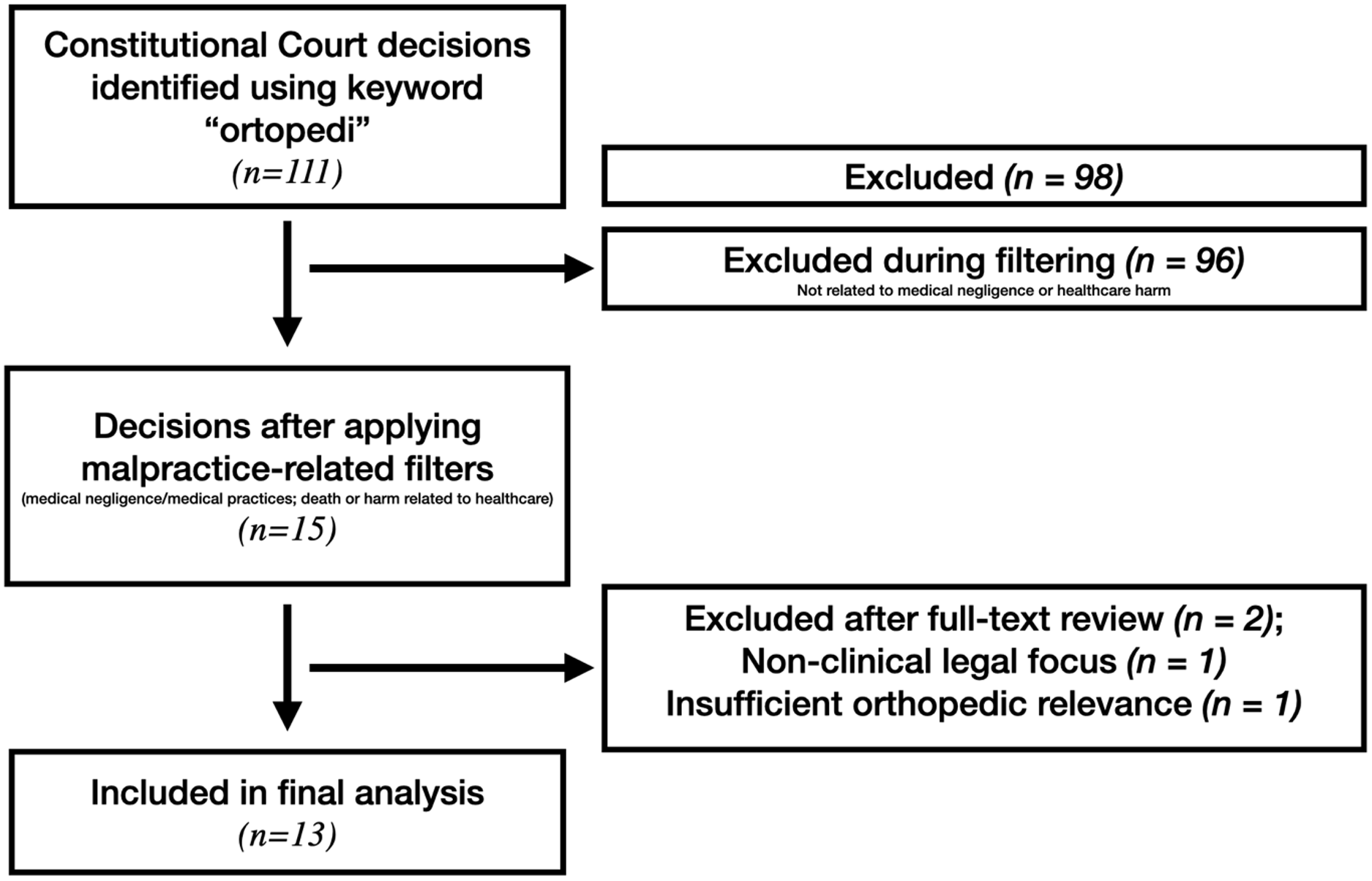
All publicly available decisions were retrieved from the official Constitutional Court decision database (https://www.anayasa.gov.tr/tr/kararlar-bilgi-bankasi). A systematic search was performed using the keyword “ortopedi” (orthopedics). To ensure relevance to malpractice-related claims, results were further filtered using the legal categories “medical negligence/medical practices” and “death or harm resulting from medical negligence or lack of access to healthcare services.” The initial search yielded 111 decisions. After application of the malpractice-related filters, 15 decisions were identified for full-text review, Figure 1.
Eligibility criteria
Decisions were included if they involved orthopedic clinical care and contained allegations related to medical negligence, delayed diagnosis or treatment, inadequate management, or malpractice. Cases were excluded if they primarily addressed non-clinical issues, such as custodial care, ill treatment unrelated to medical practice, or procedural complaints without substantive evaluation of orthopedic care. Following full text review, two decisions were excluded due to insufficient clinical relevance, resulting in a final sample of 13 Constitutional Court decisions. Clinical relevance was defined as cases involving direct orthopedic diagnosis, treatment, or postoperative management.
Data extraction
For each included decision, clinical and legal data were systematically extracted from the full texts. Extracted variables included the clinical context of orthopedic care, the orthopedic subspecialty involved, the primary malpractice allegation, the reported clinical outcome, the Constitutional Court’s ruling, and any remedies ordered.
Subspecialty classification
Orthopedic subspecialties were categorized according to the predominant clinical scenario described in each case, including trauma-related care, elective orthopedic surgery, postoperative complication management, pediatric orthopedic care, and hand surgery. When classification was uncertain, the clinical context was reassessed to ensure consistent categorization.
Outcome Measures and Analysis
The primary outcomes were the distribution of orthopedic subspecialties, types of malpractice allegations, and legal outcomes of Constitutional Court decisions. Secondary analysis examined clinical patterns associated with findings of constitutional violations. Data were analyzed descriptively using frequencies and percentages. Judicial reasoning was qualitatively reviewed to identify recurring factors contributing to constitutional violations.
Results
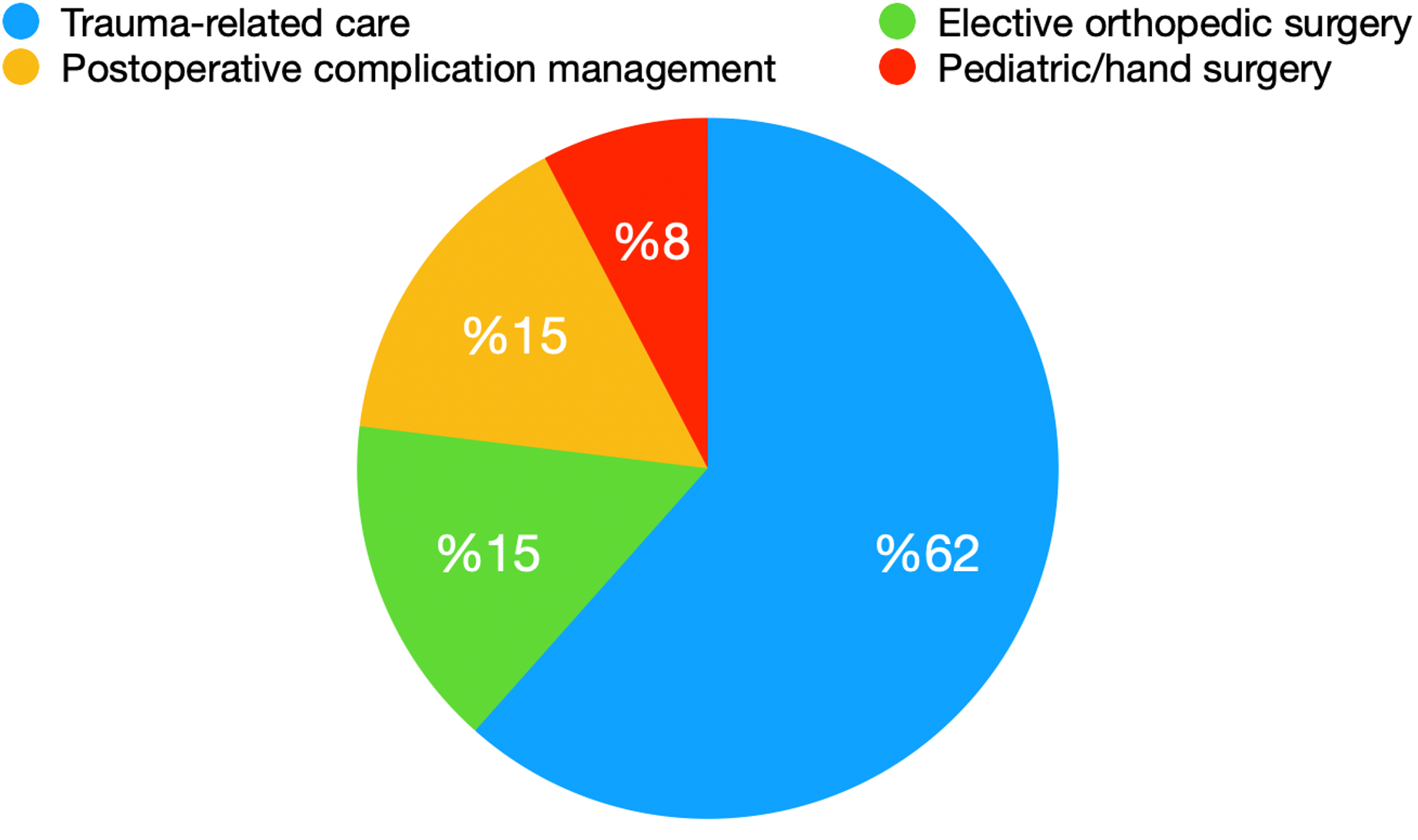
Trauma-related orthopedic care constituted the majority of included cases, accounting for 61.5% (8/13). Elective orthopedic surgery and postoperative complication management each represented 15.4% of cases (2/13), while pediatric and hand surgery contexts accounted for 7.7% (1/13) of cases (Table 1, Figure 2).
| Table 1. Clinical and legal characteristics of orthopedic malpractice cases reviewed by the Constitutional Court. | |||||||
| Decision no. | Clinical context | Subspecialty | Primary allegation | Clinical outcome | Court decision | Remedy | |
| 1 | 2013/2803 | Post-traumatic orthopedic care | Trauma | Inadequate fracture management | Permanent impairment | Inadmissible | None |
| 2 | 2014/19349 | Trauma-related orthopedic treatment | Trauma | Delayed or inadequate treatment | Severe injury | Inadmissible | None |
| 3 | 2016/11550 | Orthopedic treatment following injury | Trauma | Inadequate clinical management | Persistent disability | No violation | None |
| 4 | 2017/18143 | Postoperative complication | Postoperative care | Inadequate complication management | Neurological deficit | Violation | Retrial |
| 5 | 2017/40500 | Neonatal orthopedic injury | Pediatric orthopedics | Inadequate fracture and nerve injury management | Permanent functional loss | No violation | None |
| 6 | 2019/4610 | Trauma-related care | Trauma | Delayed diagnosis and treatment | Long-term disability | Violation | Retrial and compensation |
| 7 | 2019/11247 | Elective orthopedic surgery | Elective surgery | Inadequate informed consent | Permanent impairment | Violation | Retrial |
| 8 | 2020/10663 | Upper extremity fracture | Hand surgery | Inadequate immobilization | Delayed surgical intervention | No violation | None |
| 9 | 2020/16941 | Elective orthopedic surgery | Elective surgery | Alleged surgical mismanagement | Functional limitation | No violation | None |
| 10 | 2020/22429 | Postoperative mortality | Postoperative care | Failure to manage complications | Death | Violation | Retrial |
| 11 | 2020/26359 | Trauma-related orthopedic treatment | Trauma | Insufficient follow-up | Permanent disability | Violation | Retrial |
| 12 | 2021/12621 | Trauma management | Trauma | Insufficient clinical monitoring | Severe disability | Violation | Retrial |
| 13 | 2021/51903 | Major orthopedic trauma | Trauma | Delayed multidisciplinary intervention | Death | Inadmissible | None |
Delayed diagnosis or treatment was the most common malpractice allegation, occurring in 30.8% of cases (4/13). Inadequate clinical management accounted for 23.1% (3/13), followed by poor complication management and insufficient monitoring or follow-up, each representing 15.4% (2/13). Inadequate informed consent and multidisciplinary system-related delays were observed less frequently, each in one case (7.7%) (Table 2).
| Table 2. Distribution of primary malpractice allegations in orthopedic constitutional court cases. | ||
| Primary allegation |
|
|
| Delayed diagnosis or treatment |
|
|
| Inadequate clinical management |
|
|
| Poor complication management |
|
|
| Insufficient monitoring or follow-up |
|
|
| Inadequate informed consent |
|
|
| Multidisciplinary/system-related delay |
|
|
| Total |
|
|
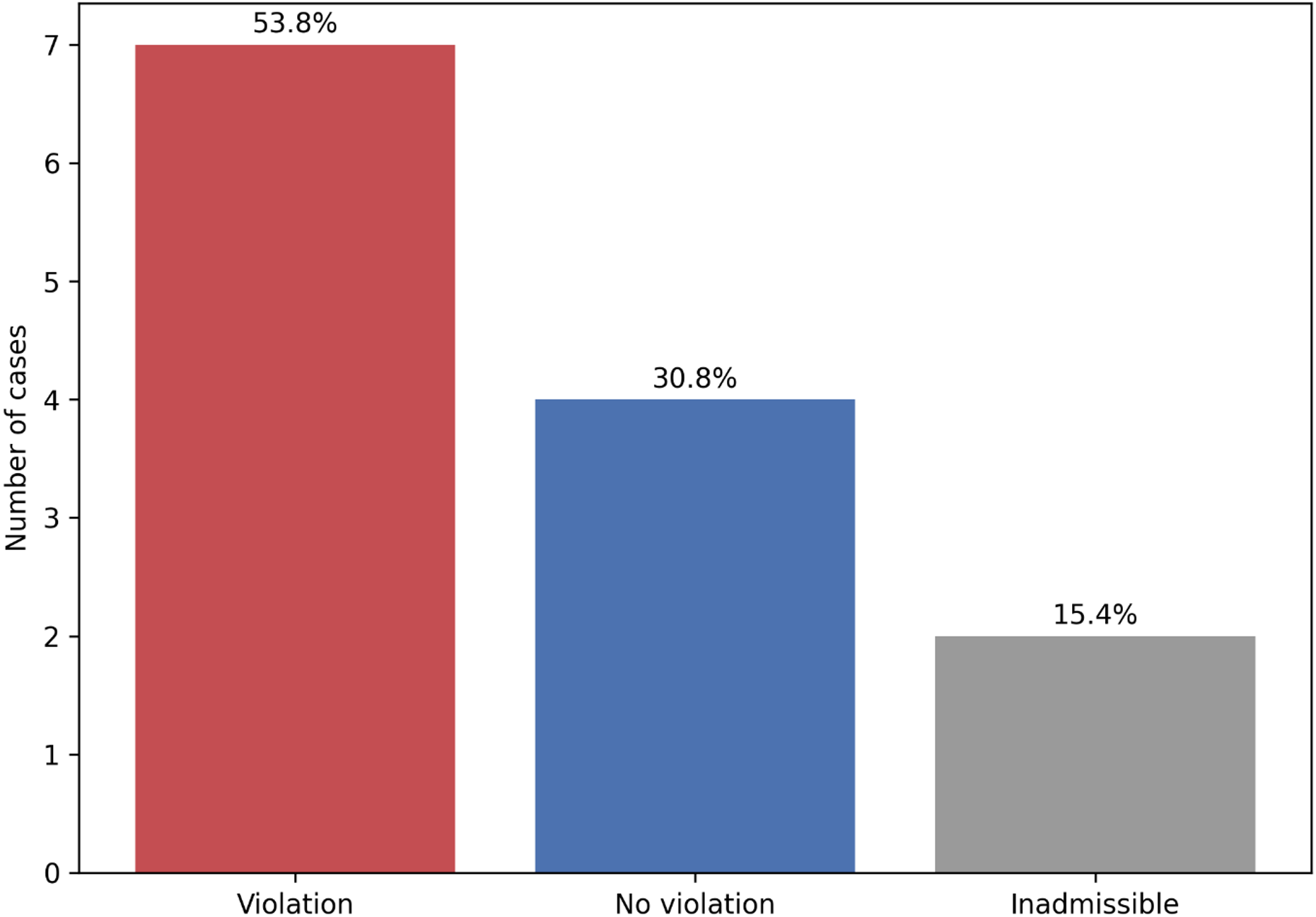
Constitutional violations were identified in 53.8% of cases (7/13). No violation was determined in 30.8% (4/13), while 15.4% (2/13) of applications were declared inadmissible (Figure 3).
Among trauma-related cases, constitutional violations were observed in 50.0% (4/8), whereas two cases resulted in no violation and two were deemed inadmissible. Both cases involving postoperative complication management resulted in findings of constitutional violations. In elective orthopedic surgery, one case resulted in a violation and one in no violation, while the single pediatric or hand surgery case resulted in no violation (Table 3). Importantly, constitutional violation findings were predominantly related to deficiencies in judicial reasoning, expert evaluation, or procedural safeguards rather than direct confirmation of orthopedic malpractice.
| Table 3. Orthopedic subspecialties and Constitutional Court legal outcomes. | ||||
| Subspecialty |
|
|
|
|
| Trauma-related care |
|
|
|
|
| Elective orthopedic surgery |
|
|
|
|
| Postoperative complication management |
|
|
|
|
| Pediatric/hand surgery |
|
|
|
|
| Total |
|
|
|
|
Discussion
This study demonstrates that trauma-related orthopedic care constituted the majority of cases reviewed at the constitutional level; however, these findings reflect the characteristics of disputes subjected to rights-based judicial review rather than the overall incidence of orthopedic malpractice. Delayed diagnosis or treatment and inadequate clinical management were the most frequently observed allegations. Cases involving postoperative complication management demonstrated a consistently high rate of constitutional violations.
The predominance of trauma related care among malpractice claims is consistent with the clinical characteristics of orthopedic practice [7,14]. Trauma management frequently occurs in emergency settings where rapid assessment and decision making are required [15]. Injury patterns may be complex, and early clinical findings can evolve over time [15]. These factors may increase the likelihood of diagnostic uncertainty, delayed recognition of complications, or incomplete documentation. Furthermore, trauma care often involves coordination among multiple medical teams, and communication gaps or referral delays may contribute to adverse outcomes [15,16].
Delayed diagnosis or treatment represented the most common allegation in the present series. In orthopedic trauma, early identification of fracture patterns, neurovascular compromise, or compartment syndrome is critical [17]. Even relatively short delays in appropriate intervention may lead to permanent functional impairment [18,19]. From a legal perspective, delays in care may facilitate the establishment of a causal relationship between clinical management and adverse outcomes [20]. As a result, such cases may be more likely to progress through judicial review.
An important finding was the consistent identification of constitutional violations in cases related to postoperative complication management [21]. Postoperative care requires systematic monitoring and timely response to clinical deterioration. Although complications may occur despite appropriate surgical technique, failure to recognize or manage these complications in a timely manner may be interpreted as a deviation from expected standards of care [22]. The findings suggest that courts may evaluate postoperative management with particular attention to the adequacy of monitoring and responsiveness.
The relatively high proportion of constitutional violations in this cohort warrants careful interpretation. Constitutional review does not primarily reassess medical fault but evaluates whether judicial proceedings adequately protected fundamental rights, including the right to life and bodily integrity [7,11]. In several decisions, violations were associated not only with clinical concerns but also with deficiencies in expert evaluation, judicial reasoning, or lower assessment [11]. This distinction highlights that constitutional findings primarily reflect procedural inadequacies in judicial evaluation rather than direct confirmation of medical negligence, emphasizing the need to interpret these results within their legal context.
The distribution of subspecialties and allegations observed in this study is broadly aligned with patterns reported in orthopedic malpractice literature, where trauma care, fracture management, and delays in diagnosis are commonly identified risk areas [7,8]. Özdemir et al. examined 71 orthopedic malpractice cases from the Supreme Court and found that most claims arose from trauma care, diagnostic delays, and postoperative complications, with physicians ultimately found at fault in about one-third of cases, while many decisions were overturned due to inadequate expert evaluation [7]. In contrast, our Constitutional Court analysis of 13 cases shows a much lower rate of established rights violations, with the majority of applications dismissed as inadmissible or resulting in no violation, indicating that while clinical allegations are similar, only a small proportion escalate to constitutional level breaches of patient rights. These findings are also consistent with international malpractice literature, where trauma-related care, delayed diagnosis, and postoperative complications are among the most frequently reported causes of litigation [8,14]. However, unlike conventional malpractice studies that directly assess physician liability, the present study reflects the subset of cases escalating to constitutional review, where procedural adequacy and protection of fundamental rights play a central role.
While direct clinical recommendations cannot be derived from constitutional decisions, the findings highlight recurrent clinical contexts, such as trauma care, delayed diagnosis, and postoperative management, that are frequently associated with medicolegal disputes. Structured evaluation protocols in trauma settings, clear documentation of decision-making processes, and timely referral to appropriate subspecialists may reduce the risk of adverse outcomes. In the postoperative period, standardized monitoring and early recognition of complications may be particularly relevant. Strengthening communication among multidisciplinary teams may also reduce system related delays.
Several limitations should be acknowledged. The number of cases is limited, reflecting the selective nature of Constitutional Court review rather than the overall frequency of orthopedic malpractice claims. The descriptive design does not allow statistical modeling. In addition, reliance on judicial decisions restricts access to detailed clinical data. Despite these limitations, the study shows the types of orthopedic cases that reach constitutional adjudication and the clinical circumstances most frequently associated with adverse legal outcomes.
Conclusion
In conclusion, orthopedic malpractice claims reviewed at the constitutional level most commonly involve trauma related care and are frequently associated with delayed diagnosis or treatment and inadequate clinical management. Although constitutional violations were identified in a substantial proportion of cases, these findings often reflect procedural deficiencies in judicial evaluation rather than direct determinations of medical fault. Attention to timely clinical intervention, structured postoperative monitoring, and comprehensive documentation may contribute to improved patient outcomes and reduced legal exposure.
Ethical approval
Ethics committee approval and informed consent were not required for this study.
Data availability statement
The data that support the findings of this study are available from the corresponding author upon reasonable request.
Conflict of interest
The authors declare that this study was conducted in the absence of any commercial or financial relationships that could be construed as a potential conflict of interest.
Funding
The authors declare that this study received no funding.
Generative AI statement
The authors declare that no generative AI or AI-assisted technologies were used in the writing or preparation of this study.
References
- Dun C, Rumalla KC, Walsh CM, Escobar C. Evaluating patient and surgeon characteristics associated with care cost and outcomes for knee and hip replacement procedures: a national medicare cohort study. JB JS Open Access 2024;9(1):e23.00088. https://doi.org/10.2106/JBJS.OA.23.00088
- Carroll AE, Buddenbaum JL. High and low-risk specialties experience with the U.S. medical malpractice system. BMC Health Serv Res 2013;13:465. https://doi.org/10.1186/1472-6963-13-465
- Jena AB, Seabury S, Lakdawalla D, Chandra A. Malpractice risk according to physician specialty. N Engl J Med 2011;365(7):629-36. https://doi.org/10.1056/NEJMsa1012370
- Kwan JL, Calder LA, Bowman CL, et al. Characteristics and contributing factors of diagnostic error in surgery: analysis of closed medico-legal cases and complaints in Canada. Can J Surg 2024;67(1):E58-E65. https://doi.org/10.1503/cjs.003523
- Sailhan F, Bouché PA, Delaunay C, Hamadouche M, Chatellard R. Reasons for malpractice claims after primary total hip arthroplasty in France: insurance data from 240 claims from 2014 to 2017. Orthop Traumatol Surg Res 2024;110(5):103885. https://doi.org/10.1016/j.otsr.2024.103885
- Megalla M, Zaifman JM, Grace ZT, Imam N, Kohan EM, Alberta FG. Medical malpractice litigation following humeral fractures in the United States. Shoulder Elbow 2025;17(1):43-9. https://doi.org/10.1177/17585732231201976
- Özdemir U, Akar A, Serttaş MF, Başer A. Fifteen years of orthopedic malpractice litigation in türkiye: a supreme court analysis and international comparison. J Clin Med 2026;15(2):625. https://doi.org/10.3390/jcm15020625
- Gill SS, Sugand K, Gupte CM. Why do orthopaedic surgeons get sued? An analysis of £2.2 billion in claims against NHS England: trends in litigation and strategies to enhance care. Arch Orthop Trauma Surg 2025;145(1):351. https://doi.org/10.1007/s00402-025-05957-y
- A’Court J, Yassa R, Charalambous CP. Litigation related to casting in Orthopaedics-An analysis of claims against the National Health Service in England. Injury 2017;48(7):1405-7. https://doi.org/10.1016/j.injury.2017.04.037
- Lane J, Bhome R, Somani B. National trends and cost of litigation in UK National Health Service (NHS): a specialty-specific analysis from the past decade. Scott Med J 2021;66(4):168-74. https://doi.org/10.1177/00369330211052627
- Necmiye ŞE, Mehmet A, Ömer K, Mustafa A. Tıbbi uygulama hatalarina yönelik türkiye cumhuriyeti anayasa mahkemesi kararlarinin incelenmesinde; anesteziyoloji ve reanimasyon uzmanliği ile ilgili hatali tibbi uygulama iddialarinin tespiti ve analizi: kesitsel araştirma. Türkiye Klinikleri Anesteziyoloji Reanimasyon Dergisi 2025;23(1):15-26. https://doi.org/10.5336/anesthe.2025-109499
- Latario LD, Deter CJ, Deter AM, Baratz ME. The increasing medicolegal cost in the care of high-level athletes. J Shoulder Elbow Surg 2025;34(1):414-9. https://doi.org/10.1016/j.jse.2024.07.011
- Sönmez MM, Alpsoy MY, Özdemir E, Sevin A, Kaygusuz MA. Malpractice litigation after total hip arthroplasty: A legal 10-year database. Jt Dis Relat Surg 2023;34(2):389-95. https://doi.org/10.52312/jdrs.2023.1029
- Thabet AM, Adams A, Jeon S, et al. Malpractice lawsuits in orthopedic trauma surgery: a meta-analysis of the literature. OTA Int 2022;5(3):e199. https://doi.org/10.1097/OI9.0000000000000199
- Creager AE, Siebler JC. Optimizing the orthopaedic trauma patient- staged management. operative techniques in orthopaedics 2024;34(3):101127. https://doi.org/10.1016/j.oto.2024.101127
- Greco T, Bernasconi A, Perisano C. Trauma and orthopedic surgery: recent developments and future challenges. J Clin Med 2025;14(13):4654. https://doi.org/10.3390/jcm14134654
- Laasonen EM, Kivioja A. Delayed diagnosis of extremity injuries in patients with multiple injuries. J Trauma 1991;31(2):257-60.
- Crist BD, Ferguson T, Murtha YM, Lee MA. Surgical timing of treating injured extremities: an evolving concept of urgency. Instr Course Lect 2013;62:17-28.
- Gyftopoulos S, Chitkara M, Bencardino JT. Misses and errors in upper extremity trauma radiographs. AJR Am J Roentgenol 2014;203(3):477-91. https://doi.org/10.2214/AJR.14.12589
- Ravery AS, Villatte G, Dartus J, Descamps S, Boisgard S, Erivan R. Reasons for delays to orthopaedic and trauma surgery: a retrospective five-year cohort. Orthop Traumatol Surg Res 2023;109(4):103535. https://doi.org/10.1016/j.otsr.2022.103535
- Saud AM, Raza T, Kamran M, et al. Complications and revision surgery in orthopedics focusing on traumatology. Cureus 2024;16(7):e65640. https://doi.org/10.7759/cureus.65640
- Ricketts D, Rogers RA, Roper T, Ge X. Recognising and dealing with complications in orthopaedic surgery. Ann R Coll Surg Engl 2017;99(3):185-8. https://doi.org/10.1308/rcsann.2016.0364
Copyright and License
Copyright © 2026 The Author(s). This is an open access article distributed under the Creative Commons Attribution License (CC BY), which permits unrestricted use, distribution, and reproduction in any medium or format, provided the original work is properly cited.