

Graphical Abstract
Abstract
Objective: Idiopathic normal pressure hydrocephalus (iNPH) is a potentially reversible cause of functional and cognitive decline in older adults. Although endoscopic third ventriculostomy (ETV) has emerged as an alternative treatment option in selected patients, its multidimensional impact on geriatric syndromes remains unclear. This study aimed to evaluate changes in comprehensive geriatric assessment (CGA) parameters following ETV in patients with iNPH.
Materials and Methods: This prospective observational study included 14 patients aged ≥55 years with iNPH who underwent ETV. Patients were categorized according to clinical improvement based on the iNPH Grading Scale. CGA domains—including Katz Activities of Daily Living (ADL), Lawton–Brody Instrumental (ADL), Clinical Frailty Scale (CFS), SARC-F, Mini Nutritional Assessment–Short Form (MNA-SF), Yesavage Geriatric Depression Scale (GDS), Older People’s Quality of Life Questionnaire (OPQOL), and the Quick Mild Cognitive Impairment Screen-Turkish Version (qMCI-TR) were evaluated preoperatively and at 1 and 3 months after ETV.
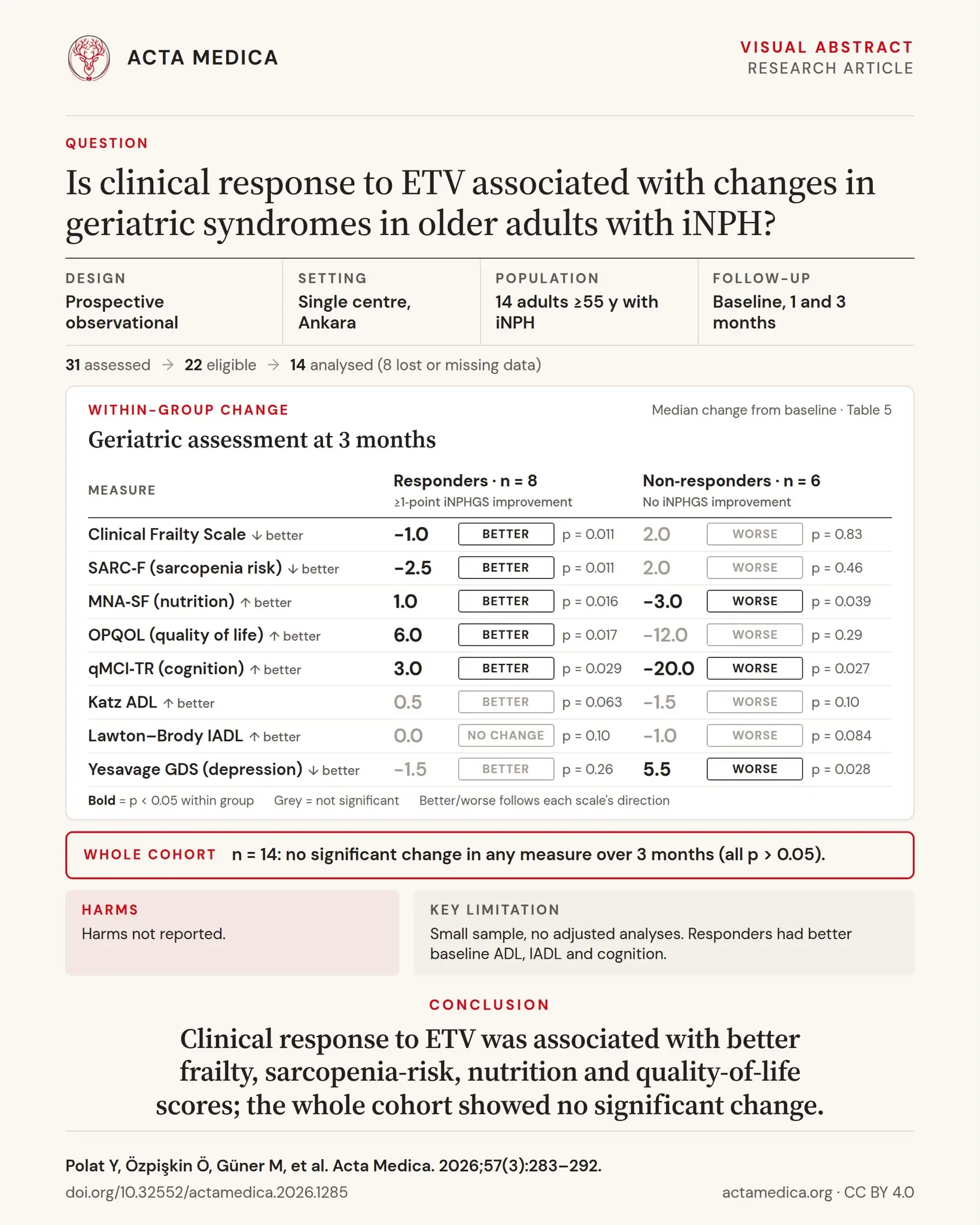
Results: Eight patients (57.1%) demonstrated clinical improvement after ETV. At baseline, the clinical improvement group had higher Katz ADL, IADL, and qMCI-TR scores than the without improvement group. At 1st month, the clinical improvement group showed significant improvements in Katz ADL (Δ=1.0, p=0.025), CFS (Δ=−1.0, p=0.011), SARC-F (Δ=−2.0, p=0.011), MNA-SF (Δ=1.0, p=0.011), and OPQOL (p=0.017). At 3rd month, further significant improvements were observed in CFS (Δ=−1.0, p=0.011), OPQOL (Δ=6.0, p=0.017), SARC-F (Δ=−2.5, p=0.011), and MNA-SF (Δ=1.0, p=0.016). In contrast, patients without clinical improvement showed no consistent favorable changes across CGA domains.
Conclusion: In older adults with iNPH, clinical response to ETV was associated with meaningful improvements across multiple geriatric domains, particularly frailty, sarcopenia risk, nutritional status, functional status, and quality of life. These findings suggest that the benefits of ETV may extend beyond the classical symptom triad and support the integration of CGA into the perioperative evaluation of patients with iNPH.
Keywords: endoscopic third ventriculostomy, frailty, geriatric syndromes, idiopathic normal pressure hydrocephalus, older adults
Introduction
Idiopathic normal pressure hydrocephalus (iNPH) is a clinical syndrome characterized by the classic triad of gait disturbance, cognitive dysfunction, and urinary incontinence, accompanied by ventriculomegaly on neuroimaging in the absence of elevated cerebrospinal fluid (CSF) pressure [1]. Originally described by Hakim and Adams in 1965, iNPH is a potentially reversible cause of cognitive and gait impairment in older adults [2]. The diagnosis is typically supported by radiological evidence of ventricular enlargement disproportionate to cortical atrophy, along with clinical improvement following CSF diversion procedures [3]. According to the American–European guidelines, the prevalence of iNPH is reported to be approximately 3.7% in the general population and 8.9% among individuals aged 80 years and older [4]. The prevalence of iNPH increases with age, is most commonly observed in adults over 60 years, and affects both sexes equally. Evidence supports the effectiveness of surgical management in iNPH, primarily through ventriculoperitoneal shunt (VPS) placement or endoscopic third ventriculostomy (ETV) as the main therapeutic options [5]. Without treatment, iNPH can lead to significant neurological decline and an elevated risk of mortality [6].
ETV has regained prominence as an effective and less invasive approach for the management of obstructive hydrocephalus, standing alongside traditional shunting procedures. ETV is a minimally invasive neurosurgical procedure that restores CSF circulation by creating an opening in the floor of the third ventricle, thereby bypassing impaired CSF pathways [5]. Compared with VPS, ETV avoids permanent shunt dependency and shunt-related complications and has emerged as an alternative treatment option in selected patients with iNPH. However, clinical response to ETV is variable, particularly in older adults, and reliable predictors of postoperative outcomes remain insufficiently defined [7].
Given the central role of functional status and frailty in older adults, neglecting geriatric syndromes may lead to an incomplete understanding of treatment outcomes after ETV [8]. Frailty encompasses functional decline across multiple physiological systems, including neurodegeneration, sarcopenia, and cognitive impairment [9]. However, some of the most pronounced structural and functional deterioration occurs within the musculoskeletal system, adversely affecting balance, mobility, disability, and ultimately the ability to live independently [10]. Geriatric syndromes such as malnutrition and sarcopenia, which are closely associated with reduced physiological reserve, may adversely affect postoperative recovery and functional improvement [11]. Exploring how these syndromes interact with neurosurgical interventions could provide valuable insights for patient selection, perioperative risk stratification, and individualized treatment planning [12] . Previous studies have demonstrated that ETV can be safely performed in selected older adults; however, these studies primarily focused on procedural success and did not comprehensively evaluate geriatric syndromes or multidimensional outcomes [13]. While the impact of geriatric syndromes on clinical outcomes has been explored in patients undergoing VPS, evidence specifically addressing how these syndromes influence outcomes after ETV remains limited. Therefore, the present study aimed to evaluate the impact of geriatric syndromes on clinical outcomes after ETV in patients with iNPH.
Material and Method
Study design and participants
This prospective observational study included 14 older adults with iNPH who underwent ETV at Ankara University Hospital between July 2023 and May 2024. Eligible patients were prospectively evaluated for clinical outcomes following surgery. Older adults aged ≥55 years with a diagnosis of iNPH, with symptom duration of at least 3 months, and CSF opening pressure between 70 and 200 mmH₂O were included in the study.
Based on postoperative clinical assessment, patients were categorized into two groups: those with clinical improvement and those without clinical improvement. Clinical improvement was determined using standardized clinical evaluations, including changes in gait, cognitive function, and urinary symptoms as assessed during follow-up visits according to the iNPH Grading Scale (iNPHGS) [14]. A ≥1-point improvement in the iNPHGS has been used in previous studies as an indicator of a favorable clinical response following surgical treatment and was therefore adopted as the criterion for clinical improvement in the present study [15,16].
Exclusion criteria were:
- Inability to cooperate
- Presence of active malignancy
- Secondary NPH
- Communicating hydrocephalus
- CSF pressure >200 mmHg
- Symptom duration <3 months
- Lack of informed consent
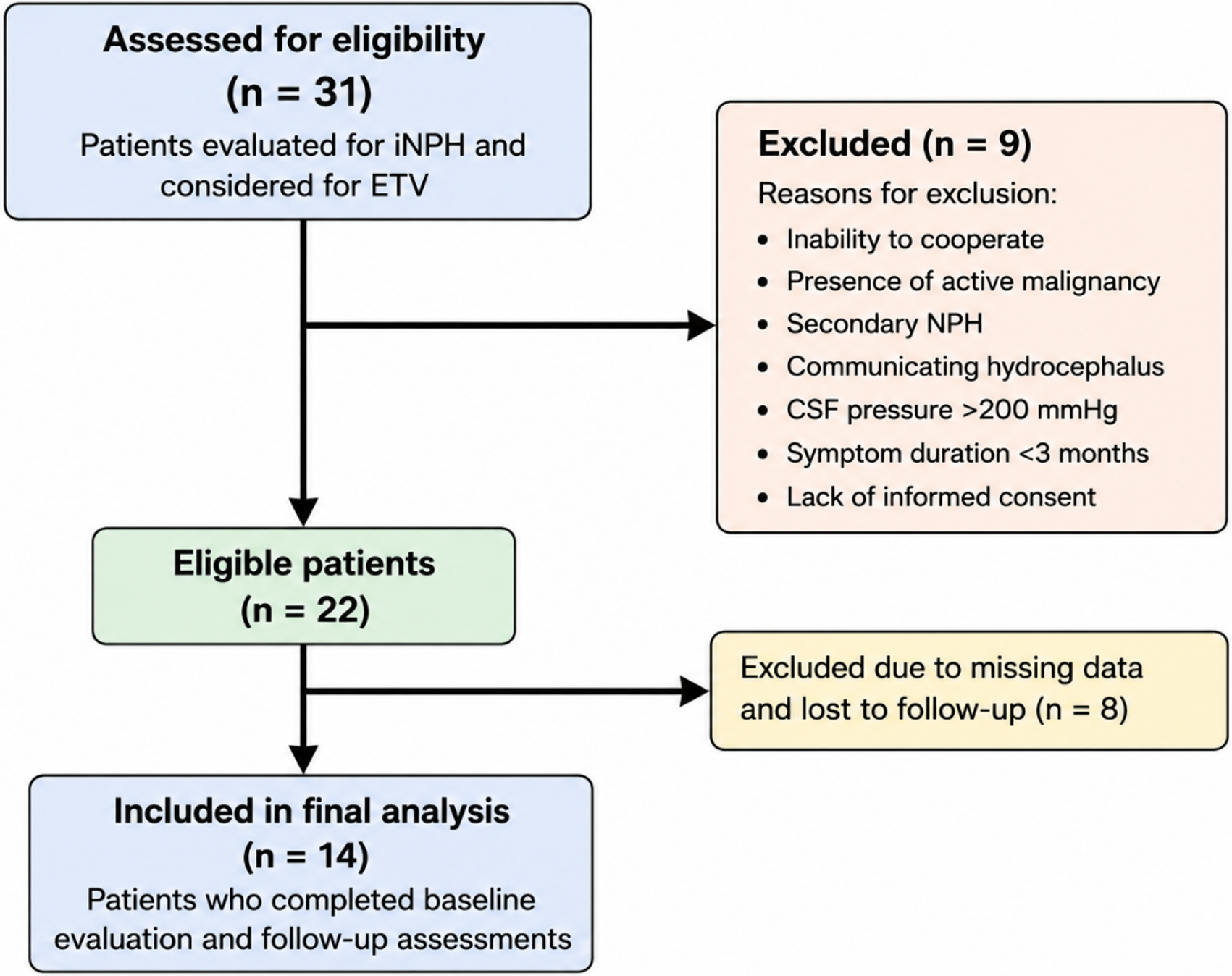
A total of 8 patients were excluded because of missing data or inability to complete follow-up assessments, as shown in Figure 1. Patients who met the inclusion criteria underwent a comprehensive geriatric assessment (CGA) as a baseline evaluation before ETV. Subsequent follow-up assessments, including repeat CGA, were conducted during routine postoperative visits at 1 and 3 months after the procedure. In the present study, the term “baseline” refers to the preoperative assessment performed prior to the ETV procedure.
Baseline demographic characteristics, clinical information on chronic diseases, and medication use were recorded. Laboratory parameters (electrolytes, thyroid-stimulating hormone, and complete blood count) were obtained from medical records. As part of the CGA, various screening and assessment tools were administered. These included the Katz Index of Activities of Daily Living (ADL), the Lawton–Brody Instrumental Activities of Daily Living (IADL) scale, the Quick Mild Cognitive Impairment Screen -Turkish Version (qMCI-TR), the Mini Nutritional Assessment–Short Form (MNA-SF), the Yesavage Geriatric Depression Scale (YGDS), the Clinical Frailty Scale (CFS), the Eating Assessment Tool-10 (EAT-10), SARC-F questionnaire, and the brief Older People’s Quality of Life questionnaire (OPQOL-brief). All CGAs were conducted by the same experienced geriatrician throughout the study [17-31]. Quality of life was assessed using the OPQOL-brief, a validated short-form instrument specifically developed for older adults. The OPQOL-brief assesses multiple domains of quality of life, with higher scores indicating better perceived quality of life [32].
Statistical analysis
To evaluate the adequacy of the sample size, a sensitivity power analysis was performed using G*Power for a repeated-measures ANOVA (within–between interaction) with two groups and three measurements. With a total sample of 14 patients and α=0.05, the study had 80% power to detect a large effect size (f≈0.42). Therefore, the findings should be interpreted primarily in the context of large clinically meaningful effects. Data were analyzed using IBM SPSS Statistics for Windows, version 22.0 (IBM Corp., Chicago, IL, USA). The distributional properties of continuous variables were evaluated both visually (histograms and probability plots) and analytically using the Shapiro–Wilk and Kolmogorov–Smirnov tests. Continuous variables with normal distribution were presented as mean ± standard deviation (SD), whereas skew distributed variables were summarized as median [interquartile range(Q1-Q3)(IQR)]. Categorical data were expressed as a number (n) and a percentage (%). Between-group comparisons of categorical variables were performed using the Chi-square test or Fisher’s exact test, as appropriate. For comparisons of continuous variables between the two independent groups, the independent samples t-test was used for normally distributed data, and the Mann–Whitney U test was used for non-normally distributed data. To evaluate within-group changes over time (baseline, 1st month, and 3rd month) and the group-by-time interaction effect between the two main groups, a repeated measures ANOVA was conducted for normally distributed variables. For non-normally distributed variables, within-group changes over time were assessed using the Friedman test with post-hoc Wilcoxon signed-rank tests A two-tailed p-value <0.05 was considered statistically significant.
Results
A total of 14 patients were evaluated, of whom 3 (21.4%) were female and 11 (78.6%) were male, with a mean age of 68.6 ± 8.4 years. Among the study cohort, 8 patients (57.1%) were classified as the clinical improvement group, while 6 (42.9%) formed the group without clinical improvement. Table 1 presents the clinical and demographic characteristics of the study population. The CGA findings of the study group at baseline and at the first and third months after ETV are shown in Table 2. No statistically significant changes were observed in CGA parameters, including Katz ADL, Lawton- Brody IADL, CFS, SARC-F, MNA-SF, GDS, OPQOL, and qMCI-TR across baseline, 1-month, and 3-month assessments in the overall study group (all p>0.05).
| Variables are presented as n (%), mean ±SD, median (IQR) values. BMI: Body Mass Index. | |
| Table 1. The clinical and demographic features of the study population. | |
| Features |
|
| Age, years |
|
| Sex, female |
|
| BMI, kg/m2 |
|
| Education, 8 years and below |
|
| Marital Status, married |
|
| Smoking |
|
| Comorbidities | |
| Hypertension |
|
| Diabetes Mellitus |
|
| Coronary Artery Disease |
|
| Hyperlipidemia |
|
| Benign Prostate Hyperplasia |
|
| Clinical Improvement (+) |
|
| Variables are presented as n (%), mean ±SD, median (IQR) values. ADL: Activities of daily living; CFS: Clinical Frailty Scale; IADL: Instrumental Activities of Daily Living; MNA-SF: Mini-Nutritional Assessment Short-Form; GDS: Geriatric Depression Scale; OPQOL: Older People’s Quality of Life questionnaire; qMCI-TR: the Quick Mild Cognitive Impairment Screen Turkish Version. | ||||
| Table 2. Comprehensive geriatric assessment of the study group at baseline, first, and third months after treatment. | ||||
|
|
|
|
|
|
| Katz ADL |
|
|
|
|
| Lawton-Brody IADL |
|
|
|
|
| CFS |
|
|
|
|
| SARC-F |
|
|
|
|
| MNA-SF |
|
|
|
|
| Yesevage GDS |
|
|
|
|
| OPQOL |
|
|
|
|
| qMCI-TR |
|
|
|
|
Table 3 presents the baseline comprehensive geriatric and clinical characteristics of patients with iNPH stratified by clinical improvement status after ETV. At baseline, patients who achieved clinical improvement after ETV showed significantly higher Katz ADL, Lawton-Brody IADL, and qMCI-TR scores compared with those without improvement (p=0.015, p=0.024, and p=0.012, respectively). No significant differences were observed between the groups in age, sex, BMI, frailty status, nutritional status, or sarcopenia screening parameters (all p>0.05). Table 4 summarizes the changes in CGA scores at 1st month after ETV according to clinical improvement status. Statistically significant changes at 1st month after ETV were observed in the clinical improvement group for Katz ADL (median change: 1.0 [0.0 to 1.0], p = 0.025), CFS (median change: −1.0 [−1.0 to −1.0], p = 0.011), SARC-F (median change: −2.0 [−2.5 to −1.0], p = 0.011), MNA-SF (median change: 1.0 [1.0 to 1.0], p = 0.011), and OPQOL scores (median change: 3.0 [2.0 to 5.5], p = 0.017). No statistically significant changes were observed in the without clinical improvement group across CGA parameters (all p > 0.05). As shown in Table 5, at 3rd month after ETV, statistically significant changes were observed in the clinical improvement group for the CFS (median change: −1.0 [−1.5 to −1.0], p = 0.011), OPQOL scores (median change: 6.0 [2.5 to 8.5], p = 0.017), SARC-F (median change: −2.5 [−4.0 to −1.0], p = 0.011), and MNA-SF (median change: 1.0 [1.0 to 2.0], p = 0.016). In the without clinical improvement group, statistically significant changes were observed for MNA-SF (median change: −3.0 [−3.0 to −1.0], p = 0.039) and GDS scores (median change: 5.5 [2.0 to 11.0], p = 0.028). Other CGA parameters did not show statistically significant changes (p > 0.05).
| Table 3. Baseline demographic, laboratory values and clinical characteristics of iNPH patients with and without clinical improvement following ETV. | |||
|
|
|
|
|
| Age, years |
|
|
|
| Sex, female |
|
|
|
| BMI, kg/m2 |
|
|
|
| Katz ADL |
|
|
|
| Lawton-Brody IADL |
|
|
|
| CFS |
|
|
|
| Living with Frailty (CFS≥4) |
|
|
|
| EAT-10 |
|
|
|
| SARC-F |
|
|
|
| Sarcopenia Risk (SARC-F>4) |
|
|
|
| MNA-SF |
|
|
|
|
Malnutrition (MNA-SF≤11) |
|
|
|
| Yesevage GDS |
|
|
|
| OPQOL |
|
|
|
| qMCI-TR |
|
|
|
| Degree of Improvement (iNPHGS) |
|
|
|
| Laboratory Values | |||
| Na (mmol/L) |
|
|
|
| K (mmol/L) |
|
|
|
| AST (U/L) |
|
|
|
| ALT (U/L) |
|
|
|
| Creatinine (mg/dL) |
|
|
|
| TSH (mIU/L) |
|
|
|
| Ferritin (ng/mL) |
|
|
|
| Hb (g/dL) |
|
|
|
| Variables are presented as n (%), mean ±SD, median (IQR) values. Bold indicates p < 0.05. ADL: Activities of daily living; ALT: Alanine aminotransferase; AST: Aspartate aminotransferase; BMI: Body Mass Index; CFS: Clinical Frailty Scale; EAT-10: Eating Assessment Tool-10; Hb: Hemoglobin; IADL: Instrumental Activities of Daily Living; MNA-SF: Mini-Nutritional Assessment Short-Form; GDS: Geriatric Depression Scale; OPQOL: Older People’s Quality of Life questionnaire; qMCI-TR: the Quick Mild Cognitive Impairment Screen Turkish Version; TSH: Thyroid-stimulating hormone. | |||
| Higher scores indicate better status for Katz ADL, IADL, and MNA-SF; higher scores indicate worse status for CFS, Yesevage GDS, and SARC-F. Variables are presented as n (%), mean ±SD, median (IQR) values. Bold indicates p < 0.05. ADL: Activities of daily living; BMI: Body Mass Index; CFS: Clinical Frailty Scale; IADL: Instrumental Activities of Daily Living; MNA-SF: Mini-Nutritional Assessment Short-Form; GDS: Geriatric Depression Scale; OPQOL: Older People’s Quality of Life questionnaire; qMCI-TR: the Quick Mild Cognitive Impairment Screen Turkish Version. |
||||
| Table 4. Change in scores (delta scores) of CGA parameters 1 month after the treatment by clinical improvement status. | ||||
|
|
|
|
|
|
| Katz ADL |
|
|
|
|
| Lawton-Brody IADL |
|
|
|
|
| CFS |
|
|
|
|
| OPQOL |
|
|
|
|
| SARC-F |
|
|
|
|
| MNA-SF |
|
|
|
|
| Yesevage GDS |
|
|
|
|
| qMCI-TR |
|
|
|
|
| Higher scores indicate better status for Katz ADL, IADL, and MNA-SF; higher scores indicate worse status for CFS, Yesevage GDS and SARC-F. Variables are presented as n (%), mean ±SD, median (IQR) values. Bold indicates p < 0.05. ADL: Activities of daily living; BMI: Body Mass Index; CFS: Clinical Frailty Scale; IADL: Instrumental Activities of Daily Living; MNA-SF: Mini-Nutritional Assessment Short-Form; GDS: Geriatric Depression Scale; OPQOL: Older People’s Quality of Life questionnaire; qMCI-TR: the Quick Mild Cognitive Impairment Screen Turkish Version |
||||
| Table 5. Change in scores (delta scores) of CGA parameters 3 months after the treatment by clinical improvement status. | ||||
|
|
|
|
|
|
| Katz ADL |
|
|
|
|
| Lawton-Brody IADL |
|
|
|
|
| CFS |
|
|
|
|
| OPQOL |
|
|
|
|
| SARC-F |
|
|
|
|
| MNA-SF |
|
|
|
|
| Yesevage GDS |
|
|
|
|
| qMCI-TR |
|
|
|
|
Discussion
The present study aimed to explore the association between baseline geriatric characteristics and clinical outcomes following ETV and to evaluate changes in CGA parameters after the procedure in patients with iNPH.
One of the main findings of this study was that baseline CGA profiles were associated with clinical response after ETV. Patients who achieved clinical improvement had higher baseline functional and cognitive scores. In addition, patients who showed clinical improvement following ETV exhibited favorable changes across multiple geriatric domains, including functional status, frailty, sarcopenia risk, nutritional status, and quality of life. These findings suggest that ETV may be associated with improvements in several geriatric domains beyond the traditional clinical triad.
Frailty is a dynamic and potentially reversible geriatric syndrome characterized by reduced physiological reserve and increased vulnerability to stressors [33]. Previous studies have shown that frailty status may improve when underlying contributors, such as impaired mobility or chronic disease burden, are effectively addressed. In this context, our findings suggest that clinical improvement after ETV in patients with iNPH may be accompanied by favorable changes in frailty status, reflecting the modifiable nature of frailty in response to improvement in the underlying neurological condition. However, given the observational nature and small sample size of the study, these findings should be interpreted with caution. Patients with clinical improvement after ETV showed statistically significant improvement in frailty status during follow-up. Although frailty in patients with iNPH/NPH has been predominantly studied in the context of VPS, our findings help address an important gap in the literature by examining changes in frailty status following ETV [34].
Previous studies examining the relationship between frailty and outcomes after VPS have reported heterogeneous results. However, the overall evidence suggests that frail patients tend to experience higher postoperative complication rates and derive less clinical benefit following VPS compared with non-frail individuals [34,35]. The observed improvement in frailty among patients who achieved clinical improvement after ETV suggests that frailty status may change alongside clinical response. These findings support the consideration of frailty assessment as part of the evaluation of outcomes following ETV in older adults. Therefore, these findings suggest that ETV may be considered in selected frail patients with iNPH, although larger studies are required to confirm its effectiveness and safety in this population.
Functional status is a core component of CGA and closely associated with frailty and overall clinical outcomes in older adults. In patients with iNPH, gait disturbance and reduced mobility are major contributors to functional dependence. Previous studies evaluating ETV outcomes have primarily focused on gait function, a key element of the clinical triad; notably, Sankey et al. reported meaningful improvements in functional gait outcomes following primary ETV in selected iNPH patients [36]. Building on these observations, the present study extends outcome assessment beyond gait by incorporating CGA-based domains. Patients who achieved clinical improvement after ETV also demonstrated improvements in functional status during follow-up. This observation may reflect a relationship between clinical response and functional outcomes in patients with iNPH.
Malnutrition and sarcopenia are highly prevalent and interrelated geriatric syndromes that contribute to functional decline, vulnerability to stressors, and adverse clinical outcomes in older adults. Studies specifically evaluating changes in nutritional status or sarcopenia following ETV in patients with iNPH are scarce. Malnutrition is defined as a state of deficient nutrient intake or assimilation leading to altered body composition and diminished physical and cognitive function, whereas sarcopenia is characterized by the progressive loss of skeletal muscle strength and performance [11,37]. In the present study, patients who achieved clinical improvement following ETV also demonstrated improvements in MNA-SF and SARC-F scores. These findings suggest a possible association between clinical response after ETV and changes in nutritional status and sarcopenia risk. Although the underlying mechanisms remain uncertain, improvements in mobility, physical performance, and functional independence after neurological recovery may contribute to these observations, as these factors are recognized determinants of nutritional intake and muscle preservation in older adults. Given the observational design and small sample size, these findings should be interpreted with caution. Nevertheless, they suggest that nutritional status and sarcopenia-related parameters may change alongside clinical improvement in selected patients with iNPH.
In patients with iNPH, ETV success is primarily evaluated based on improvements in cognition, gait and balance, and urinary continence, and most outcome measures used to define procedural success focus on these three domains. Previous evidence indicates that although advanced age is not an absolute contraindication for ETV, outcomes in older patients are more variable, highlighting the need for CGA to optimize patient selection [38]. In our study, patients with better baseline functional and cognitive performance tended to achieve better clinical outcomes after ETV. These findings may indicate that earlier identification and intervention, prior to significant functional and cognitive decline, could be associated with improved treatment response in patients with iNPH.
Quality of life is a key patient-centered outcome in older adults with iNPH, reflecting the multidimensional impact of gait disturbance, cognitive impairment, and functional dependency. The significant increase in OPQOL scores observed in the clinically improved group following ETV suggests that successful CSF diversion may translate into meaningful gains in perceived well-being. This improvement is likely mediated by enhanced mobility, greater functional independence, and partial cognitive recovery after neurological improvement. Previous studies have similarly demonstrated that effective treatment of iNPH can lead to measurable improvements in health-related quality of life [39,40]. Taken together, these findings suggest that patient-reported outcome measures such as OPQOL may provide additional information regarding treatment outcomes in patients with iNPH.
This study has several limitations that should be acknowledged. First, the relatively small sample size limits the statistical power of the analyses and may restrict the generalizability of the findings. Larger, multicenter cohorts are needed to validate our observations. Second, the follow-up period was relatively short; therefore, causal inferences regarding the longitudinal relationship between ETV and changes in geriatric parameters cannot be firmly established. Studies with longer follow-up durations would help clarify the temporal dynamics and sustainability of the observed improvements. Third, our analysis focused exclusively on patients undergoing ETV. Inclusion of patients treated with VPS could have enabled a more comprehensive comparison of the relative advantages and disadvantages of the two surgical approaches. Another limitation of the present study is that the classification of clinical improvement was based on predefined clinical assessments; however, the lack of universally standardized criteria for defining ETV success may have introduced potential classification bias. In addition, a priori power analysis was not conducted prior to data collection, which limits the interpretability of the present findings. The study may have been underpowered to detect moderate effect sizes that could still be clinically meaningful, and non-significant results should not be interpreted as evidence of the absence of an effect. Furthermore, potential confounding factors, including age, sex, and comorbidity burden, were not evaluated in adjusted analyses. Given the small sample size, multivariable analyses were not feasible. Therefore, the independent contribution of these factors to the observed changes in geriatric outcomes could not be determined, and residual confounding cannot be excluded. Future studies with larger populations should address these factors in greater detail. A major strength of this study is its evaluation of geriatric syndromes in older adults undergoing ETV, helping to address a gap in the literature. Importantly, the prospective follow-up design enabled longitudinal evaluation of geriatric domains. Although ETV is an increasingly utilized surgical approach in selected patients with iNPH, evidence focusing on its broader geriatric implications remains limited. By evaluating frailty, nutritional status, sarcopenia screening, and quality of life in this context, our findings help shed light on the multidimensional clinical impact of ETV beyond traditional neurological outcomes and contribute to filling an important gap in the current literature.
In conclusion, in older adults with iNPH, clinical improvement following ETV was accompanied by meaningful gains across multiple geriatric domains, including frailty, functional status, nutritional status, sarcopenia screening, and quality of life. These findings suggest that the benefits of ETV may extend beyond the classical symptom triad and highlight the dynamic and potentially modifiable nature of geriatric syndromes in this population. Incorporating CGA into the perioperative evaluation of iNPH patients may enhance patient selection, prognostication, and postoperative monitoring.
Ethical approval
This study was approved by the Hacettepe University Faculty of Medicine Non-Interventional Clinical Research Ethics Committee (Date: July 11, 2023, Decision/Protocol No: GO 23/562). Informed consent was obtained from all participants involved in this study.
Data availability statement
The data that support the findings of this study are available from the corresponding author upon reasonable request.
Conflict of interest
The authors declare that this study was conducted in the absence of any commercial or financial relationships that could be construed as a potential conflict of interest.
Funding
The authors declare that this study received no funding.
Generative AI statement
The authors declare that no generative AI or AI-assisted technologies were used in the writing or preparation of this study.
References
- Wang Z, Zhang Y, Hu F, Ding J, Wang X. Pathogenesis and pathophysiology of idiopathic normal pressure hydrocephalus. CNS Neurosci Ther 2020;26(12):1230-40. https://doi.org/10.1111/cns.13526
- Hakim S, Adams RD. The special clinical problem of symptomatic hydrocephalus with normal cerebrospinal fluid pressure. Observations on cerebrospinal fluid hydrodynamics. J Neurol Sci 1965;2(4):307-27. https://doi.org/10.1016/0022-510x(65)90016-x
- Passos-Neto CEB, Lopes CCB, Teixeira MS, Studart Neto A, Spera RR. Normal pressure hydrocephalus: an update. Arq Neuropsiquiatr 2022;80(5 Suppl 1):42-52. https://doi.org/10.1590/0004-282X-ANP-2022-S118
- Andersson J, Rosell M, Kockum K, Lilja-Lund O, Söderström L, Laurell K. Prevalence of idiopathic normal pressure hydrocephalus: a prospective, population-based study. PLoS One 2019;14(5):e0217705. https://doi.org/10.1371/journal.pone.0217705
- Harbaugh TD, Stoltzfus MT, Hallan DR, Daggubati L, Rizk EB. Ventriculoperitoneal shunting versus endoscopic third ventriculostomy for the surgical management of ıdiopathic normal pressure hydrocephalus: a retrospective cohort analysis. Cureus 2025;17(2):e78347. https://doi.org/10.7759/cureus.78347
- Jaraj D, Wikkelsø C, Rabiei K, et al. Mortality and risk of dementia in normal-pressure hydrocephalus: a population study. Alzheimers Dement 2017;13(8):850-7. https://doi.org/10.1016/j.jalz.2017.01.013
- Greuter L, Schenker T, Guzman R, Soleman J. Endoscopic third ventriculostomy compared to ventriculoperitoneal shunt as treatment for idiopathic normal pressure hydrocephalus: a systematic review and meta-analysis. Br J Neurosurg 2024;38(6):1276-82. https://doi.org/10.1080/02688697.2022.2149697
- Roy JM, Kazim SF, Macciola D, et al. Frailty as a predictor of postoperative outcomes in neurosurgery: a systematic review. J Neurosurg Sci 2024;68(2):208-15. https://doi.org/10.23736/S0390-5616.23.06130-1
- Pilotto A, Custodero C, Maggi S, Polidori MC, Veronese N, Ferrucci L. A multidimensional approach to frailty in older people. Ageing Res Rev 2020;60:101047. https://doi.org/10.1016/j.arr.2020.101047
- Polat Y, Yalcin A, Yazihan N, et al. The relationship between frailty and serum alpha klotho levels in geriatric patients. Arch Gerontol Geriatr 2020;91:104225. https://doi.org/10.1016/j.archger.2020.104225
- Cruz-Jentoft AJ, Bahat G, Bauer J, et al. Sarcopenia: revised European consensus on definition and diagnosis. Age Ageing 2019;48(1):16-31. https://doi.org/10.1093/ageing/afy169
- Luciano MG, Williams MA, Hamilton MG, et al. A randomized trial of shunting for ıdiopathic normal-pressure hydrocephalus. N Engl J Med 2025;393(22):2198-209. https://doi.org/10.1056/NEJMoa2503109
- Niknejad HR, Depreitere B, De Vleeschouwer S, Van Calenbergh F, van Loon J. Results of endoscopic third ventriculostomy in elderly patients ≥65 years of age. Clin Neurol Neurosurg 2015;130:48-54. https://doi.org/10.1016/j.clineuro.2014.12.009
- Kubo Y, Kazui H, Yoshida T, et al. Validation of grading scale for evaluating symptoms of idiopathic normal-pressure hydrocephalus. Dement Geriatr Cogn Disord 2008;25(1):37-45. https://doi.org/10.1159/000111149
- Chen J, He W, Zhang X, et al. Value of MRI-based semi-quantitative structural neuroimaging in predicting the prognosis of patients with idiopathic normal pressure hydrocephalus after shunt surgery. Eur Radiol 2022;32(11):7800-10. https://doi.org/10.1007/s00330-022-08733-3
- Shinoda N, Hirai O, Hori S, et al. Utility of MRI-based disproportionately enlarged subarachnoid space hydrocephalus scoring for predicting prognosis after surgery for idiopathic normal pressure hydrocephalus: clinical research. J Neurosurg 2017;127(6):1436-42. https://doi.org/10.3171/2016.9.JNS161080
- Lawton MP, Brody EM. Assessment of older people: self-maintaining and instrumental activities of daily living. Gerontologist 1969;9(3):179-86.
- Isik EI, Yilmaz S, Uysal I, Basar S. Adaptation of the lawton instrumental activities of daily living scale to Turkish: validity and reliability study. Ann Geriatr Med Res 2020;24(1):35-40. https://doi.org/10.4235/agmr.19.0051
- Rockwood K, Song X, MacKnight C, et al. A global clinical measure of fitness and frailty in elderly people. CMAJ 2005;173(5):489-95. https://doi.org/10.1503/cmaj.050051
- Özsürekci C, Balcı C, Kızılarslanoğlu MC, et al. An important problem in an aging country: identifying the frailty via 9 point clinical frailty scale. Acta Clin Belg 2020;75(3):200-4. https://doi.org/10.1080/17843286.2019.1597457
- Guigoz Y, Lauque S, Vellas BJ. Identifying the elderly at risk for malnutrition. The mini nutritional assessment. Clin Geriatr Med 2002;18(4):737-757. https://doi.org/10.1016/s0749-0690(02)00059-9
- Sarikaya D, Halil M, Kuyumcu ME, et al. Mini nutritional assessment test long and short form are valid screening tools in Turkish older adults. Arch Gerontol Geriatr 2015;61(1):56-60. https://doi.org/10.1016/j.archger.2015.04.006
- Belafsky PC, Mouadeb DA, Rees CJ, et al. Validity and reliability of the Eating Assessment Tool (EAT-10). Ann Otol Rhinol Laryngol 2008;117(12):919-24. https://doi.org/10.1177/000348940811701210
- Malmstrom TK, Morley JE. SARC-F: a simple questionnaire to rapidly diagnose sarcopenia. J Am Med Dir Assoc 2013;14(8):531-2. https://doi.org/10.1016/j.jamda.2013.05.018
- Bahat G, Yilmaz O, Kılıç C, Oren MM, Karan MA. Performance of SARC-F in regard to sarcopenia definitions, muscle mass and functional measures. J Nutr Health Aging 2018;22(8):898-903. https://doi.org/10.1007/s12603-018-1067-8
- O’Connor MN, O’Sullivan D, Gallagher PF, Eustace J, Byrne S, O’Mahony D. Prevention of hospital-acquired adverse drug reactions in older people using screening tool of older persons’ prescriptions and screening tool to alert to right treatment criteria: a cluster randomized controlled trial. J Am Geriatr Soc 2016;64(8):1558-66. https://doi.org/10.1111/jgs.14312
- Yavuz BB, Varan HD, O’Caoimh R, et al. Validation of the Turkish version of the quick mild cognitive impairment screen. Am J Alzheimers Dis Other Demen 2017;32(3):145-56. https://doi.org/10.1177/1533317517691122
- Ertan T, Bugay G, Eker E. Geriatrik depresyon ölçeği kısa versiyonlarının Türk yaşlı toplumunda geçerlik ve güvenilirliği: GDS-15, GDS-10, GDS-4. 5. Ulusal Geropsikiyatri Sempozyumu; 2004.
- Yesavage JA, Brink TL, Rose TL, et al. Development and validation of a geriatric depression screening scale: a preliminary report. J Psychiatr Res 1982;17(1):37-49. https://doi.org/10.1016/0022-3956(82)90033-4
- Katz S, Ford AB, Moskowitz RW, Jackson BA, Jaffe MW. Studies of illness in the aged. The index of ADL: a standardized measure of biological and psychosocial function. JAMA 1963;185:914-9. https://doi.org/10.1001/jama.1963.03060120024016
- Arik G, Varan HD, Yavuz BB, et al. Validation of Katz index of independence in activities of daily living in Turkish older adults. Arch Gerontol Geriatr 2015;61(3):344-50. https://doi.org/10.1016/j.archger.2015.08.019
- Bowling A, Hankins M, Windle G, Bilotta C, Grant R. A short measure of quality of life in older age: the performance of the brief Older People’s Quality of Life questionnaire (OPQOL-brief). Arch Gerontol Geriatr 2013;56(1):181-7. https://doi.org/10.1016/j.archger.2012.08.012
- Clegg A, Young J, Iliffe S, Rikkert MO, Rockwood K. Frailty in elderly people. Lancet 2013;381(9868):752-62. https://doi.org/10.1016/S0140-6736(12)62167-9
- Koo AB, Elsamadicy AA, Renedo D, et al. Hospital frailty risk score predicts adverse events and readmission following a ventriculoperitoneal shunt surgery for normal pressure hydrocephalus. World Neurosurg 2023;170:e9-e20. https://doi.org/10.1016/j.wneu.2022.08.037
- Courville E, Rumalla K, Kazim SF, et al. Risk analysis index as a preoperative frailty tool for elective ventriculoperitoneal shunt surgery for idiopathic normal pressure hydrocephalus. J Neurosurg 2023;140(4):1110-6. https://doi.org/10.3171/2023.7.JNS23767
- Sankey EW, Jusué-Torres I, Elder BD, et al. Functional gait outcomes for idiopathic normal pressure hydrocephalus after primary endoscopic third ventriculostomy. J Clin Neurosci 2015;22(8):1303-8. https://doi.org/10.1016/j.jocn.2015.02.019
- Cederholm T, Jensen GL, Correia MITD, et al. GLIM criteria for the diagnosis of malnutrition - A consensus report from the global clinical nutrition community. J Cachexia Sarcopenia Muscle 2019;10(1):207-17. https://doi.org/10.1002/jcsm.12383
- Mehta NH, Greenberg ABW, Kahle KT. The Efficacy of endoscopic third ventriculostomy for idiopathic normal pressure hydrocephalus. World Neurosurg 2023;179:158-66. https://doi.org/10.1016/j.wneu.2023.08.071
- Mori E, Ishikawa M, Kato T, et al. Guidelines for management of idiopathic normal pressure hydrocephalus: second edition. Neurol Med Chir (Tokyo) 2012;52(11):775-809. https://doi.org/10.2176/nmc.52.775
- Kazui H, Miyajima M, Mori E, Ishikawa M, SINPHONI-2 Investigators. Lumboperitoneal shunt surgery for idiopathic normal pressure hydrocephalus (SINPHONI-2): an open-label randomised trial. Lancet Neurol 2015;14(6):585-94. https://doi.org/10.1016/S1474-4422(15)00046-0
Copyright and License
Copyright © 2026 The Author(s). This is an open access article distributed under the Creative Commons Attribution License (CC BY), which permits unrestricted use, distribution, and reproduction in any medium or format, provided the original work is properly cited.