

Abstract
Objective: Social media has transformed patient-physician interactions, with YouTube emerging as a major contributor. Platelet-rich plasma (PRP) therapy has gained substantial popularity in orthopedics despite ongoing debate regarding its effectiveness. As orthobiologic treatments are increasingly promoted directly to consumers, concerns have emerged regarding the quality, reliability, and potential bias of online information. This study aimed to evaluate the quality, reliability, and bias of YouTube videos related to PRP in orthopedics.
Materials and Methods: A cross-sectional analysis of YouTube was performed, using the search terms “prp,” “prp knee,” and “prp shoulder.” The first 50 results were recorded, and after exclusions, eligible videos were analyzed. Video metadata were recorded and content sources were categorized as physician, medical institution, or non-medical sources. Information quality was assessed using Brief DISCERN instrument, JAMA Criteria, and Global Quality Score (GQS). Bias was evaluated based on predefined criteria including promotional language and testimonial-driven claims.
Results: A total of 111 videos were analyzed. Physicians produced 49.5% of videos, followed by institutions (39.6%) and non-medical sources (10.8%). Overall information quality was low-to-moderate, with median Brief DISCERN, JAMA, and GQS scores of 17, 3, and 3, respectively. Significant differences were observed between uploader types for all quality metrics (DISCERN p=0.008; JAMA and GQS p<0.001). Physicians demonstrated higher quality compared to medical institutions and non-medical sources. Overall, 40.5% of videos were classified as biased, with no significant association between source and bias (p=0.0516). Non-biased videos had higher JAMA (p=0.038) and GQS (p=0.025) scores. Longer videos were associated with higher quality and engagement (all p<0.001), while popularity metrics were not associated with information quality.
Conclusion: YouTube videos on PRP in orthopedics demonstrate variable quality, incomplete transparency, and a notable proportion of potentially biased content. Physician-generated content is associated with higher quality, although overall reliability and transparency remain inconsistent. These findings highlight both the need and the opportunity for more accurate, transparent, balanced, and evidence-based content to better support patient decision-making.
Keywords: platelet-rich plasma, orthopedics, social media, health information quality, bias
Introduction
In the current landscape of digital health, social media platforms have substantially transformed the traditional patient-provider dynamic, shifting toward more participatory and information-driven interactions [1-3]. Among these platforms, YouTube has emerged as one of the most visited websites globally and serves as a major repository for health-related information [4-6]. Importantly, online video platforms may also provide accessible and practical educational content for patients when information is accurate, transparent, and appropriately contextualized [6-9].
This shift toward digital self-education is particularly evident in orthopedics, where patients frequently access online resources prior to consultation and explore nonoperative treatment options for chronic musculoskeletal conditions [9-12]. These resources may improve familiarity with treatment options, but they may also shape expectations before a clinician has had the opportunity to discuss indications, uncertainties, risks, and alternatives [9,13].
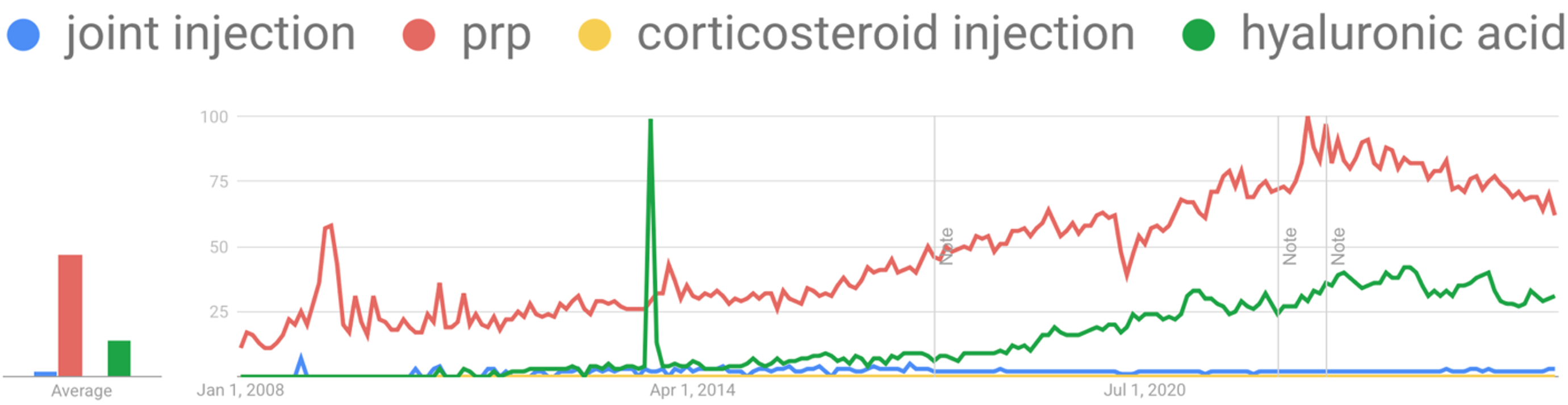
Public interest in PRP has increased in recent years, as reflected by online search trends (Figure 1). The global PRP market has demonstrated rapid growth, with estimates exceeding $600 million by 2025, largely driven by its increasing application in knee osteoarthritis and shoulder pathologies [14,15]. Although numerous clinical trials and meta-analyses suggest that PRP may improve pain and functional outcomes in selected musculoskeletal conditions, its clinical effectiveness remains debated [16-22]. This uncertainty is partly due to substantial variation in preparation methods, composition, and application protocols across studies.
The growing demand for “regenerative” therapies has led to rapid commercialization of orthobiologics, often accompanied by direct-to-consumer marketing strategies that may outpace established evidence-based guidelines [9,23,24]. In this setting, promotional narratives, selective presentation of benefits, and limited discussion of uncertainty may affect patient expectations and informed decision-making [7,25-27].
Previous studies evaluating medical and orthobiologic content on YouTube have shown variable information quality and incomplete transparency [5,28,29]. However, there remains a relative paucity of studies specifically examining PRP-related YouTube videos in orthopedics while assessing both informational quality and potential commercial or promotional bias [29,30]. This combined assessment represents the main contribution of the present study.
Therefore, the aim of this study was to evaluate the quality, reliability, and bias of YouTube videos addressing the use of PRP in orthopedic practice. We hypothesized that PRP-related videos would demonstrate variable information quality and that a substantial proportion would contain potentially promotional or biased content.
Materials and Methods
No ethical approval was required for this study, as it did not involve human participants, animal subjects, or identifiable personal data.
On 27 March 2026, a cross-sectional search of YouTube was performed using the search terms “prp”, “prp knee”, and “prp shoulder”. Searches were performed on a newly configured MacBook (Tahoe 26.4) using Safari Version 26.4, with cookies and tracking disabled, along with a newly created YouTube account based in the United States. Searches were performed using YouTube’s default relevance-based sorting, which was selected to reflect the order most likely encountered by a typical user. The first 50 results for each search term were screened because users are more likely to interact with videos appearing early in search results. Beyond this range, results increasingly included less relevant recommendations. Videos appearing in more than one search were recorded once, and duplicate entries were removed before final analysis. Non-English content, videos not related to orthopedic PRP applications, and inaccessible or duplicate videos were excluded. Metadata were collected for each video, including duration, view count, likes, comments, and video age. The creator of each video was categorized as a physician, medical institution, or non-medical source. To account for the variation in video age and its impact on popularity, a view ratio was calculated as the total number of views divided by the number of days since upload. An interaction ratio was also calculated to assess user engagement, defined as the sum of likes and comments divided by the total view count.
Information quality and reliability were evaluated using three scoring systems: the Brief DISCERN instrument, which comprises six questions scored from 1 to 5, yielding a total score ranging from 6 to 30, the JAMA (Journal of the American Medical Association) Criteria (one point for each of the four criteria), and the Global Quality Score (GQS) (scored on a 1 to 5 Likert scale) (Table 1). Source neutrality was assessed using a binary bias score, with 1 indicating the presence of bias and 0 indicating neutral presentation. Criteria for a bias score of 1 included the use of hyperbolic descriptors (e.g., “miracle solution” or “liquid gold”), the promotion of proprietary medical brands, or a heavy reliance on patient testimonials to suggest guaranteed outcomes. All videos were independently evaluated by two authors. In instances where initial scoring was not identical, discrepancies were resolved through consensus discussion with the senior author.
| Table 1. Scoring systems | |
| Question no | Brief DISCERN question |
| 1 | Is it clear what sources of information were used to compile the publication (other than the author or producer)? |
| 2 | Is it clear when the information used or reported in the publication was produced? |
| 3 | Does it describe how each treatment works? |
| 4 | Does the publication describe the benefits of each treatment? |
| 5 | Does it describe the risks of each treatment? |
| 6 | Does it describe how the treatment choices affect overall quality of life? |
| Score | Global quality description |
| 1 | Low quality, video information flow weak, most information missing, not beneficial for patients. |
| 2 | Usually, low quality and low flow of information, some listed information and many important issues are missing, very limited use for patients. |
| 3 | Moderate quality, the insufficient flow of information, and some important information is sufficiently discussed, but some are poorly discussed and somewhat useful for patients. |
| 4 | Good quality and generally good information flow. Most of the relevant information is listed, but some topics are not covered, useful for patients. |
| 5 | Excellent quality and information flow, very useful for patients. |
| JAMA criteria | Description |
| Authorship | Are the authors, contributors, and their credentials clearly listed? |
| Attribution | Are all sources of information, including references and data sources, cited? |
| Disclosure | Are potential conflicts of interest, funding sources, or commercial interests disclosed? |
| Currency | Is the date of publication or last update clearly shown? |
Statistical analysis was performed using IBM SPSS Statistics V23 (IBM Corp., Armonk, NY, USA). Descriptive data were presented as median, interquartile range (IQR), minimum, maximum, and first and third quartiles for continuous variables, and as frequencies and percentages for categorical variables. The normality of continuous variables was assessed using the Shapiro–Wilk test and histogram analysis. As the data were not normally distributed, nonparametric tests were applied. Comparisons between two groups were performed using the Mann–Whitney U test, while comparisons across multiple groups were conducted using the Kruskal-Wallis test. When significant differences were identified, post hoc pairwise comparisons were performed using Dunn’s test with Bonferroni correction. Categorical variables were analyzed using the chi-square test or Fisher’s exact test, as appropriate. Correlations between continuous variables were assessed using Spearman’s rank correlation coefficient. A p-value of <0.05 was considered statistically significant.
Results
A total of 150 videos were initially identified, and after applying exclusion criteria, 111 videos were included for final analysis. The median video age was 38.06 (IQR:44.13) months, with a median video duration of 3.83 (IQR: 6.38) minutes, and a median view count of 3807 (IQR:25421). The median view ratio was 6.9 (34.61), and the median interaction ratio was 0.0147 (IQR:0.0205).
Regarding content sources, 49.5% of videos were uploaded by physicians, 39.6% by medical institutions, and 10.8% by non-medical sources. The median Brief DISCERN score was 17 (IQR:6), corresponding to low-to-moderate information quality. The median JAMA score was 3 (IQR:1) and median Global Quality Score (GQS) was 3 (IQR:2). According to the predefined criteria, 32.7% of videos from physicians, 54.5% of videos from medical institutions, and 25.0% of videos from non-medical sources were biased, with a total of 40.5% of videos being classified as biased based on predefined criteria (Table 2) (Figure 2).
| Table 2. Descriptive statistics | |||
| Variables |
|
|
|
| Video Age (months) |
|
|
|
| Video Length (minutes) |
|
|
|
| View Count |
|
|
|
| View Ratio |
|
|
|
| Like Count |
|
|
|
| Comment Count |
|
|
|
| Interaction Ratio |
|
|
|
| Brief DISCERN Score |
|
|
|
| JAMA Score |
|
|
|
| GQS Score |
|
|
|
| Variables |
|
|
|
| Creator | Physician |
|
|
| Medical Institutions |
|
|
|
| Non-Medical Sources |
|
|
|
| Bias | Biased |
|
|
| Non-biased |
|
|
|
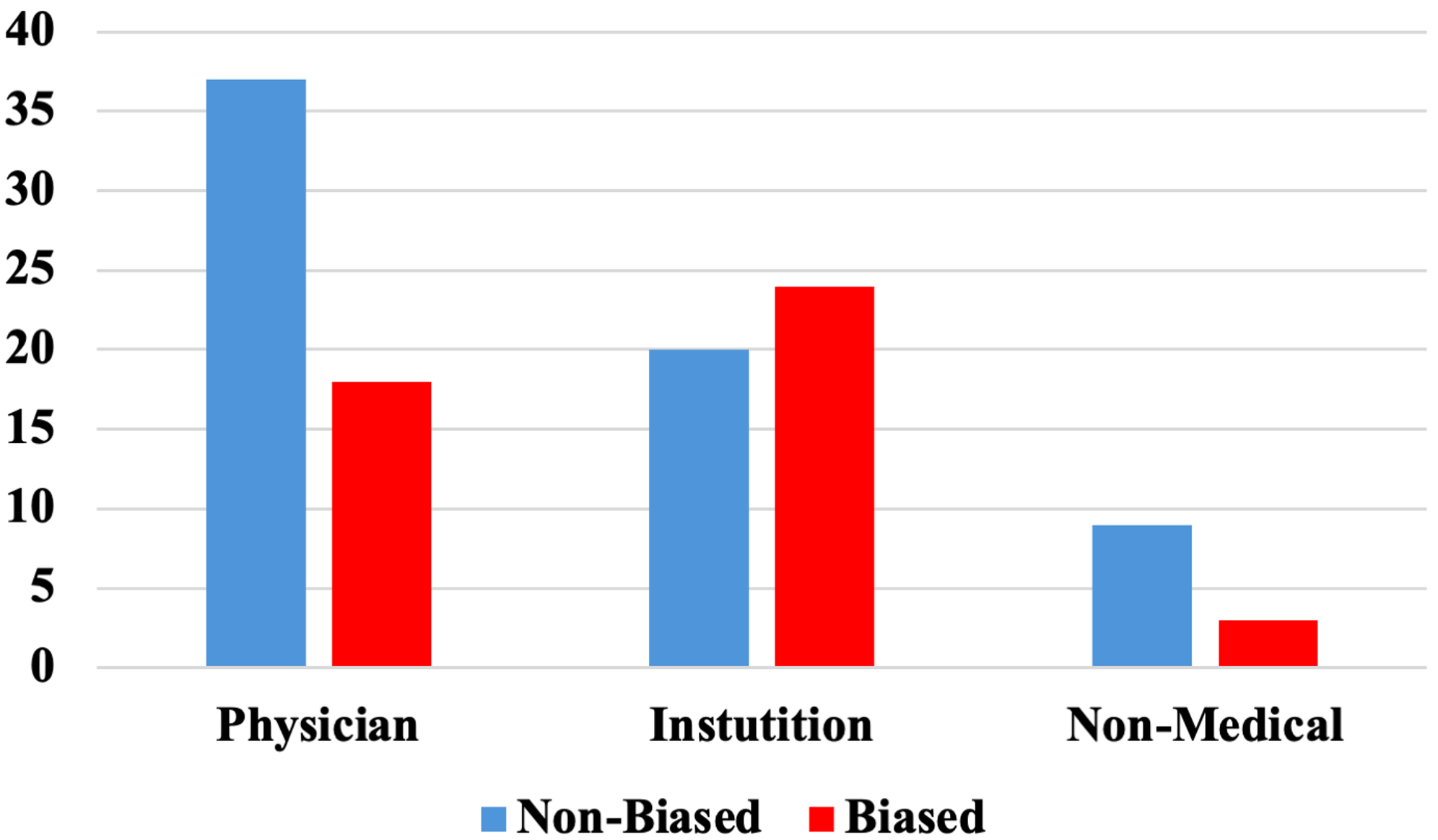
When grouped by uploader type, a significant difference was observed among physicians, medical institutions, and non-medical sources for DISCERN (p=0.008), JAMA (p<0.001), and GQS (p<0.001) scores. Physicians had significantly higher DISCERN scores compared to medical institutions (p=0.002), while no significant difference was observed between physicians and non-medical sources (p=0.185) or between medical institutions and non-medical sources (p=0.534). For JAMA and GQS scores, physician-generated videos had significantly higher scores than videos uploaded by medical institutions (p=0.0004 and p=0.0002, respectively) and non-medical sources (p=0.0071 and p=0.0020, respectively), whereas no significant differences were found between medical institutions and non-medical sources (p=0.659 and p=0.472, respectively). There was no statistically significant association between creator type and bias, although the difference approached significance (p=0.0516).
Compared to biased videos, non-biased videos showed higher JAMA (p=0.038) and GQS (p=0.025) scores, but no significant differences were found in terms of View Ratio (p=0.087), Interaction ratio (p=0.220), and Brief DISCERN scores (p=0.080). Longer videos showed higher View Ratio (p<0.001), Interaction ratio (p<0.001), Brief DISCERN scores (p<0.001), JAMA scores (p<0.001), and GQS scores (p<0.001).
Discussion
This study found substantial variability in the quality of YouTube videos addressing PRP use in orthopedics. Overall, videos exhibited low-to-moderate information quality and limited adherence to transparency criteria. A notable proportion of videos (40.5%) met the predefined criteria for bias; however, the association between uploader type and bias did not reach statistical significance (p=0.0516). Therefore, these findings should be interpreted as evidence of potentially promotional framing in a meaningful subset of videos rather than definitive proof of widespread commercial bias.
These findings are consistent with previous literature indicating that online health information often lacks completeness, proper sourcing, and accountability [5,28]. Although no significant association was observed between view-based popularity metrics and information quality, longer videos were consistently associated with higher quality scores and greater engagement. This suggests that content depth, rather than popularity, may be a more meaningful indicator of informational value. It also supports prior evidence that views, likes, and engagement are unreliable proxies for medical accuracy [28].
A key strength of this study was the simultaneous evaluation of informational quality and bias. Promotional characteristics, including hyperbolic language, brand-oriented messaging, and testimonial-driven narratives, were observed in a subset of videos. Videos classified as biased demonstrated no significant differences in Brief DISCERN scores, but significantly lower JAMA and GQS scores, which may suggest that commercially driven content may be associated with reduced scientific rigor and limited discussion of uncertainty. This aligns with previous studies highlighting deficiencies in transparency and evidence-based communication in YouTube health content [5]. The influence of commercial bias is particularly relevant in orthobiologics, where direct-to-consumer marketing has expanded rapidly and may shape patient perceptions independent of the underlying evidence [7,23].
Differences according to uploader type further contextualize these findings. Physician-generated videos demonstrated higher quality and reliability scores compared to those produced by non-medical sources, consistent with prior reports that clinician involvement improves the structure and credibility of online medical information [1]. Videos produced by medical institutions were not superior to those uploaded by non-medical sources, suggesting that institutional affiliation alone does not guarantee content quality. However, even physician-produced content did not consistently meet transparency standards, particularly regarding disclosure and referencing, which are essential components of the JAMA criteria [31]. This suggests that while professional involvement improves content quality, it does not fully address issues related to accountability and completeness.
The present findings also align with the broader literature evaluating YouTube as a source of health information. Multiple systematic reviews have concluded that YouTube contains heterogeneous and frequently unreliable medical content, with significant variability across topics and methodologies [5,28]. Within orthopedics, recent studies on orthobiologics have similarly reported low-to-moderate reliability and incomplete information, although some reports focusing specifically on PRP have suggested acceptable quality depending on study design and evaluation criteria [29,30]. These discrepancies likely reflect differences in search strategies, scoring systems, and the rapidly evolving nature of online content [32].
The susceptibility of PRP-related content to oversimplification and promotional framing may be explained by the inherent complexity and heterogeneity of PRP therapy. Although some studies have demonstrated clinical benefits in conditions such as knee osteoarthritis and rotator cuff tendinopathy, others have reported no significant advantage compared to placebo [16,17]. Meta-analyses suggest that outcomes may vary depending on factors such as platelet concentration and preparation methods [18]. This variability is further compounded by the lack of standardized classification systems and reporting protocols, which limits comparability across studies and complicates interpretation [19,22]. As a result, nuanced scientific findings may be reduced to simplified or exaggerated claims in online media, where clear and appealing narratives are often favored over balanced explanations [18].
Commercialization likely also amplifies this phenomenon. The expanding PRP market and increasing demand for regenerative therapies have created strong incentives for direct-to-consumer promotion, often emphasizing accessibility and effectiveness without adequately addressing limitations or uncertainties [15]. Similar patterns have been observed in other areas of regenerative medicine, including stem cell therapies, where misleading or exaggerated claims have raised ethical and regulatory concerns [7,23]. These dynamics contribute to the proliferation of persuasive but potentially misleading content, reinforcing the role of commercial bias in shaping online health information [7].
The clinical implications of these findings are relevant but should be interpreted in light of the study design. Biased or low-quality information may influence patient expectations, contribute to therapeutic misconception, and affect decision-making processes. Informed consent requires a clear understanding of benefits, risks, and alternatives; however, promotional content may distort this balance by emphasizing positive outcomes while minimizing uncertainty [25,27]. Moreover, exposure to online health information has been shown to affect patient behavior, including treatment preferences and healthcare utilization, and may influence the patient-physician relationship [2,26]. In this context, PRP-related online content should be considered an important component of patient education rather than a direct measure of clinical outcomes.
These findings highlight the importance of proactive patient education and the opportunity to improve online resources. Clinicians should routinely inquire about patients’ exposure to online information and provide guidance toward reliable, evidence-based resources. Open discussion of online content may enhance patient understanding and strengthen the therapeutic relationship [1,2]. Additionally, healthcare professionals and medical institutions can improve the online information environment by producing concise, balanced, and transparent videos that explain indications, expected benefits, risks, alternatives, uncertainty, and the heterogeneity of PRP preparations in accordance with established quality standards such as the JAMA criteria [31].
Several limitations should be considered. YouTube is a dynamic platform, and search results may vary over time and across users, limiting reproducibility. The cross-sectional design, restriction to English-language videos, and use of predefined search terms may limit generalizability and may not capture the full diversity of available content. Furthermore, while the Brief DISCERN instrument, JAMA criteria, and GQS are widely used, they were not specifically developed for video-based platforms and may not fully reflect all aspects of informational accuracy. The assessment of bias, although based on predefined criteria and independent review, also involves a degree of subjectivity. In addition, formal inter-rater reliability coefficients were not calculated after consensus scoring, which should be addressed in future studies.
Future research should focus on longitudinal analyses to evaluate temporal changes in content quality and incorporate more detailed assessments of scientific accuracy and evidence levels. Evaluating the impact of online content on patient knowledge, expectations, and clinical decision-making would further enhance understanding of its real-world implications. Additionally, future studies may benefit from more granular analysis of PRP-related content, including whether videos adequately address treatment heterogeneity and reporting standards.
Conclusion
YouTube videos on PRP in orthopedics demonstrate variable quality, incomplete transparency, and a notable proportion of potentially biased content. Physician-generated content is associated with higher quality, although overall reliability and transparency remain inconsistent. These findings underscore the need for more accurate, transparent, balanced, and evidence-based online content to support informed patient decision-making.
Ethical approval
Ethics committee approval and informed consent were not required for this study.
Data availability statement
The data that support the findings of this study are available from the corresponding author upon reasonable request.
Conflict of interest
The authors declare that this study was conducted in the absence of any commercial or financial relationships that could be construed as a potential conflict of interest.
Funding
The authors declare that this study received no funding.
Generative AI statement
The authors declare that no generative AI or AI-assisted technologies were used in the writing or preparation of this study.
References
- BBenetoli A, Chen TF, Aslani P. How patients’ use of social media impacts their interactions with healthcare professionals. Patient Educ Couns 2018;101(3):439-44. https://doi.org/10.1016/j.pec.2017.08.015
- Tan SSL, Goonawardene N. Internet health information seeking and the patient-physician relationship: a systematic review. J Med Internet Res 2017;19(1):e9. https://doi.org/10.2196/jmir.5729
- Ventola CL. Social media and health care professionals: benefits, risks, and best practices. P T 2014;39(7):491-520.
- Monteiro Grilo A, Ferreira AC, Pedro Ramos M, Carolino E, Filipa Pires A, Vieira L. Effectiveness of educational videos on patient’s preparation for diagnostic procedures: systematic review and meta-analysis. Prev Med Rep 2022;28:101895. https://doi.org/10.1016/j.pmedr.2022.101895
- Madathil KC, Rivera-Rodriguez AJ, Greenstein JS, Gramopadhye AK. Healthcare information on YouTube: a systematic review. Health Informatics J 2015;21(3):173-94. https://doi.org/10.1177/1460458213512220
- Wong DKK, Cheung MK. Online health information seeking and ehealth literacy among patients attending a primary care clinic in hong kong: a cross-sectional survey. J Med Internet Res 2019;21(3):e10831. https://doi.org/10.2196/10831
- Erikainen S, Couturier A, Chan S. Marketing experimental stem cell therapies in the UK: biomedical lifestyle products and the promise of regenerative medicine in the digital era. Sci Cult (Lond) 2019;29(2):219-44. https://doi.org/10.1080/09505431.2019.1656183
- Ashkanani H, Asery R, Bokubar F, et al. Web-based health information seeking among students at kuwait university: cross-sectional survey study. JMIR Form Res 2019;3(4):e14327. https://doi.org/10.2196/14327
- Meunier A, Posadzy K, Tinghög G, Aspenberg P. Risk preferences and attitudes to surgery in decision making. Acta Orthop 2017;88(5):466-71. https://doi.org/10.1080/17453674.2017.1298353
- Dekkers T, Melles M, Groeneveld BS, de Ridder H. Web-based patient education in orthopedics: systematic review. J Med Internet Res 2018;20(4):e143. https://doi.org/10.2196/jmir.9013
- Koenig S, Nadarajah V, Smuda MP, Meredith S, Packer JD, Henn RF. Patients’ use and perception of internet-based orthopaedic sports medicine resources. Orthop J Sports Med 2018;6(9):2325967118796469. https://doi.org/10.1177/2325967118796469
- Duymus TM, Karadeniz H, Çaçan MA, et al. Internet and social media usage of orthopaedic patients: a questionnaire-based survey. World J Orthop 2017;8(2):178-186. https://doi.org/10.5312/wjo.v8.i2.178
- Kennedy BL, Currie GR, Kania-Richmond A, Emery CA, MacKean G, Marshall DA. Factors that patients consider in their choice of non-surgical management for hip and knee osteoarthritis: formative qualitative research for a discrete choice experiment. Patient 2022;15(5):537-550. https://doi.org/10.1007/s40271-022-00577-9
- Freiberger C, Kale NN, Gallagher ME, Ierulli VK, O’Brien MJ, Mulcahey MK. Patients prefer medical facts and educational videos from sports medicine surgeons on social media. Arthrosc Sports Med Rehabil 2023;5(3):e649-56. https://doi.org/10.1016/j.asmr.2023.03.004
- Platelet rich plasma market size industry report, 2033. Available at: https://www.grandviewresearch.com/industry-analysis/platelet-rich-plasma-prp-market.
- Bennell KL, Paterson KL, Metcalf BR, et al. effect of intra-articular platelet-rich plasma vs placebo injection on pain and medial tibial cartilage volume in patients with knee osteoarthritis: The RESTORE Randomized Clinical Trial. JAMA 2021;326(20):2021-30. https://doi.org/10.1001/jama.2021.19415
- Roy M, Reddy MH, Das D, Priyanshu , Chandrakar D, Elavarasu AM. Effectiveness of platelet-rich plasma in treating rotator cuff tendinopathy: a systematic review and meta-analysis. J Orthop Case Rep 2025;15(3):265-74. https://doi.org/10.13107/jocr.2025.v15.i03.5408
- Bensa A, Previtali D, Sangiorgio A, Boffa A, Salerno M, Filardo G. PRP Injections for the treatment of knee osteoarthritis: the improvement is clinically significant and influenced by platelet concentration: a meta-analysis of randomized controlled trials. Am J Sports Med 2025;53(3):745-754. https://doi.org/10.1177/03635465241246524
- DeLong JM, Russell RP, Mazzocca AD. Platelet-rich plasma: the PAW classification system. Arthroscopy 2012;28(7):998-1009. https://doi.org/10.1016/j.arthro.2012.04.148
- Dohan Ehrenfest DM, Rasmusson L, Albrektsson T. Classification of platelet concentrates: from pure platelet-rich plasma (P-PRP) to leucocyte- and platelet-rich fibrin (L-PRF). Trends Biotechnol 2009;27(3):158-67. https://doi.org/10.1016/j.tibtech.2008.11.009
- Rossi LA, Murray IR, Chu CR, Muschler GF, Rodeo SA, Piuzzi NS. Classification systems for platelet-rich plasma. Bone Joint J 2019;101-B(8):891-896. https://doi.org/10.1302/0301-620X.101B8.BJJ-2019-0037.R1
- Mautner K, Malanga GA, Smith J, et al. A call for a standard classification system for future biologic research: the rationale for new PRP nomenclature. PM R 2015;7(4 Suppl):S53-9. https://doi.org/10.1016/j.pmrj.2015.02.005
- Kingery MT, Schoof L, Strauss EJ, Bosco JA, Halbrecht J. Online direct-to-consumer advertising of stem cell therapy for musculoskeletal injury and disease: misinformation and violation of ethical and legal advertising parameters. J Bone Joint Surg Am 2020;102(1):2-9. https://doi.org/10.2106/JBJS.19.00714
- Important patient and consumer information about regenerative medicine therapies 2024. Available at: https://www.fda.gov/vaccines-blood-biologics/consumers-biologics/important-patient-and-consumer-information-about-regenerative-medicine-therapies.
- Jansen LA. Informed consent, therapeutic misconception, and unrealistic optimism. Perspect Biol Med 2020;63(2):359-73. https://doi.org/10.1353/pbm.2020.0024
- Bujnowska-Fedak MM, Węgierek P. The impact of online health information on patient health behaviours and making decisions concerning health. Int J Environ Res Public Health 2020;17(3):880. https://doi.org/10.3390/ijerph17030880
- Borges do Nascimento IJ, Pizarro AB, Almeida JM, et al. Infodemics and health misinformation: a systematic review of reviews. Bull World Health Organ 2022;100(9):544-561. https://doi.org/10.2471/BLT.21.287654
- Osman W, Mohamed F, Elhassan M, Shoufan A. Is YouTube a reliable source of health-related information? A systematic review. BMC Med Educ 2022;22(1):382. https://doi.org/10.1186/s12909-022-03446-z
- Sachs JP, Weissman AC, Wagner KR, et al. YouTube is an inconsistent source of information on orthobiologics: implications for content quality, reliability, comprehensiveness, and patient decision making. Arthroscopy 2025;41(10):4225-34. https://doi.org/10.1016/j.arthro.2025.03.062
- Eravsar E, Mercan N. Platelet-rich plasma videos for knee osteoarthritis on YouTube are of acceptable quality and content. Medicine (Baltimore) 2025;104(30):e43437. https://doi.org/10.1097/MD.0000000000043437
- Silberg WM, Lundberg GD, Musacchio RA. Assessing, controlling, and assuring the quality of medical information on the Internet: caveant lector et viewor--let the reader and viewer beware. JAMA 1997;277(15):1244-5.
- Sui W, Sui A, Rhodes RE. What to watch: practical considerations and strategies for using YouTube for research. Digit Health 2022;8:20552076221123707. https://doi.org/10.1177/20552076221123707
Copyright and License
Copyright © 2026 The Author(s). This is an open access article distributed under the Creative Commons Attribution License (CC BY), which permits unrestricted use, distribution, and reproduction in any medium or format, provided the original work is properly cited.